


Views: 0 Author: Site Editor Publish Time: 2026-09-03 Origin: Site


Selecting the incorrect release liner can devastate a project. A poor material grade choice quickly leads to adhesive lock-up, die-cutting failures, and a compromised end-user application. The stakes remain incredibly high for technical buyers and packaging engineers. Poly-Coated Kraft liners solve many of these core challenges. They deliver superior moisture resistance, exceptional lay-flat characteristics, and robust dimensional stability. Unlike standard papers, their unique coating withstands fluctuating humidity without curling. This article provides an evidence-based framework for evaluating liner grades. We will guide procurement teams through critical performance metrics to match precise application demands. You will learn how varying basis weights and silicone coatings dictate success on the production line. Read on to discover the exact parameters necessary to optimize your next high-volume adhesive project.
Understanding how liner materials function begins with analyzing their physical anatomy. When you evaluate pck release paper specifications, you must look beyond basic weight. You need to assess the entire composite structure to ensure reliable manufacturing.
A standard liner features a distinct three-layer architecture. First, a raw Kraft base paper provides structural integrity and tensile strength. Second, manufacturers apply a polyethylene (PE) extrusion coating. This plastic layer seals the paper fibers, blocks moisture, and creates an ultra-smooth surface. Finally, a silicone release layer sits on top of the PE layer. The silicone determines how easily the adhesive separates from the liner. If any of these layers fail, you risk web breaks or adhesive lock-up during dispensing.
Liners come in two primary coating configurations for different manufacturing demands.
Silicone chemistry directly impacts long-term adhesive stability. Thermal-cured silicone relies on heat to bond the silicone to the PE layer. You can find both solventless and solvent-based thermal options. Solventless thermal curing dominates modern production because it eliminates hazardous VOC emissions. Alternatively, UV-cured silicone coatings offer a distinct method. UV curing uses ultraviolet light to cross-link the silicone instantly. This method minimizes heat exposure to the base paper. Be careful when choosing a curing method. Incomplete curing leads to silicone transfer. Silicone transfer contaminates the adhesive, reducing its tackiness and ruining the end product.
To compare materials accurately, you must track specific baseline metrics. Tear resistance dictates how well the paper survives automated dispensing lines. Caliper thickness influences roll diameter and die-cutting precision. Finally, you measure release force in grams per inch (g/in). This specific metric ensures the peel remains consistent across the entire web length.
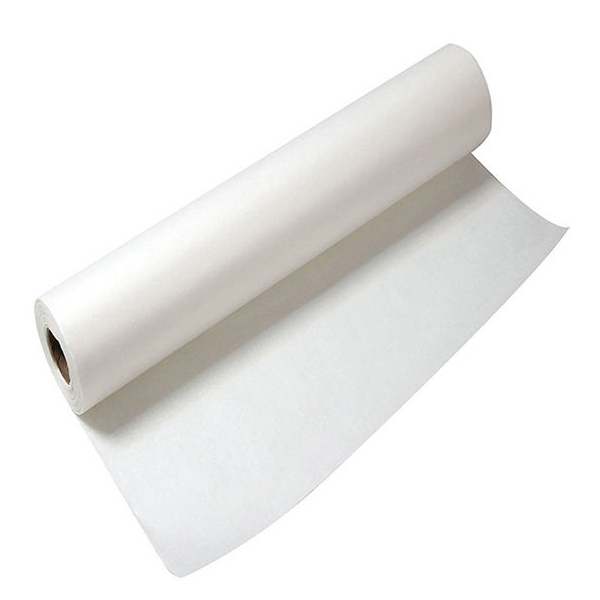
Selecting the right basis weight determines both production speed and product viability. Let us compare the industry standard against heavier alternatives.
Engineers widely consider 85gsm pck release paper the dominant baseline for industrial applications. It offers a perfect equilibrium. You get enough tensile strength to prevent tearing, alongside excellent flexibility. In automated lines running at hundreds of feet per minute, web tension fluctuates. The 85gsm paper absorbs minor tension spikes beautifully without snapping. We frequently see this grade succeeding in logistics labels, envelope closures, and standard pressure-sensitive adhesives (PSAs).
Despite its popularity, the 85gsm standard does have specific limitations. It remains prone to curling if you subject it to overly aggressive rotary die-cutting. Deep die strikes can pierce the protective PE layer on lighter papers. Once the die cuts through the polyethylene, the moisture barrier breaks. This damage allows ambient moisture to penetrate the Kraft base, causing immediate dimensional instability. You will notice the edges lifting almost instantly on the production floor.
Heavyweight liners offer significant performance upgrades for demanding environments. When you move up to 100gsm or 140gsm+, you gain higher rigidity and maximum tear resistance. These grades deliver zero-compromise flat lay characteristics. They will not curl, even under fluctuating humidity or intense mechanical stress.
We highly recommend heavyweight grades for specialized use cases. Automotive graphics and architectural window films require perfectly flat liners for bubble-free application. Heavy-duty carpet tapes need thick liners to support heavy adhesive masses. Furthermore, medical-grade transdermal patches rely on rigid liners to ensure precise dosing and sanitary handling.
| Basis Weight | Tear Resistance | Flexibility | Optimal Die-Cutting Style | Typical Application |
|---|---|---|---|---|
| 85gsm | Moderate | High | Standard flatbed, light rotary | Logistics labels, envelope tapes |
| 100gsm - 120gsm | High | Medium | Aggressive rotary | Automotive graphics, window films |
| 140gsm+ | Maximum | Low (Rigid) | Deep die strikes | Carpet tapes, medical patches |
Evaluating a pck release paper requires comparing it against other common substrates. Clay-Coated Kraft (CCK) and Glassine each hold market share, but they behave differently under physical stress.
Moisture resistance stands as the most critical difference between these two materials. CCK uses a clay coating to smooth the paper before silicone application. Clay does not block moisture effectively. Under fluctuating humidity, CCK suffers from edge-wicking. Moisture seeps into the edges, causing severe curling. PCK’s polyethylene layer blocks moisture absorption entirely. This PE barrier ensures the liner stays perfectly flat, regardless of ambient warehouse humidity.
Temperature tolerance introduces a different dynamic. CCK handles higher direct heat better than PE-coated papers. The plastic layer on poly-coated options can melt or warp if exposed to extreme oven curing temperatures. However, PCK firmly wins in dimensional stability during wet and dry cycling. For most ambient and moderate-heat applications, poly-coated liners offer superior reliability.
Consider the following operational differences when choosing between PCK and CCK:
Glassine offers excellent performance for specific, high-volume label applications. Engineers super-calender Glassine to make it extremely dense and smooth. This density makes Glassine incredibly easy to die-cut for thin, standard labels. However, Glassine lacks tear resistance. PCK offers vastly superior tensile strength. This strength prevents disastrous web breaks in heavy-duty dispensing applications. If you manufacture thick tapes, you need a poly-coated liner.
Opacity provides another major differentiator. Glassine is naturally translucent. Automated dispensing lines often rely on photoelectric sensors to detect the gap between labels. Translucent Glassine can confuse these sensors, leading to misfeeds and downtime. Poly-coated Kraft provides the necessary opacity for photoelectric sensors to function flawlessly. When translucent Glassine fails on the packaging line, switching to an opaque poly-coated kraft resolves the sensor errors immediately.
Your material is only as good as the company manufacturing it. Partnering with a reliable pck release paper supplier guarantees consistency across thousands of miles of web. You must audit their capabilities rigorously.
Inconsistent liner materials cause chaotic production delays. You must audit a supplier based on their ability to maintain strict technical tolerances. Demand a +/- 5% tolerance on both basis weight and silicone coat weight. If the silicone coat weight fluctuates by 15%, your adhesive will release too easily in some spots and lock up in others. Ask prospective partners for their historical quality control data to verify their precision.
Adhesive chemistry varies wildly. Acrylic, rubber, and silicone adhesives all interact differently with release coatings. You need a partner capable of engineering custom release profiles. They should offer easy, medium, and tight release options tailored specifically to your chosen adhesive. Off-the-shelf liners rarely perform perfectly with proprietary adhesive blends. Customization ensures smooth peeling without aggressive tearing.
Evaluating a manufacturer's certifications minimizes your operational risk. Look for ISO certifications and documented cleanroom manufacturing standards. Cleanroom environments remain absolutely critical for medical and electronic applications, where dust contamination ruins the product.
Additionally, assess their Environmental, Social, and Governance (ESG) commitments. The packaging industry faces intense pressure to adopt greener practices. Ask about the availability of solvent-less silicone technologies, which eliminate harmful VOCs. Furthermore, check if they offer FSC-certified kraft bases to support sustainable forestry initiatives. Partnering with environmentally conscious suppliers helps you meet your internal corporate sustainability goals.
Transitioning to a new material introduces logistical challenges. Manage implementation risks by discussing Minimum Order Quantities (MOQs) and lead times early in the negotiation. Large MOQs tie up capital, while long lead times threaten your production schedule.
Most importantly, always require pre-production sample testing. Never buy massive volumes without running aging and environmental chamber validation. We recommend testing the samples in high heat (often 70°C) and high humidity (up to 80% RH) for extended periods. Verify that the peel force remains stable after 30, 60, and 90 days. If the release force spikes during testing, the liner will fail in the field.
Selecting the perfect liner material guarantees your adhesive product performs exactly as designed. The decision framework relies on matching the material grade to your specific operational realities. You must evaluate the required die-cutting aggression, the end-user’s environmental conditions, and the intended dispensing method. Light grades offer flexibility and economy, while heavyweight options provide necessary rigidity for thick adhesives. Poly-coated liners consistently outperform clay-coated and glassine alternatives whenever moisture resistance and opacity are critical.
Do not leave your next production run to chance. Take actionable steps today to secure your supply chain. We strongly advise buyers to request detailed specification sheets from their shortlisted manufacturing partners. Secure aging-test samples and run them through your own environmental chambers before committing to high-volume orders. Thorough testing prevents costly adhesive lock-up and ensures absolute reliability for your end users.
A: Silicone transfer occurs due to incomplete silicone curing during manufacturing or improper warehouse storage. When uncured silicone migrates onto the adhesive, it permanently degrades the tape's stickiness. You can avoid this by selecting material grades processed with premium solventless thermal curing or instant UV curing technologies. Additionally, always audit your supplier’s curing quality controls.
A: The polyethylene coating creates a strong moisture barrier, but it makes traditional paper recycling difficult. Standard pulping facilities struggle to separate the plastic from the paper fibers. However, the industry is shifting. New repulpable and sustainable innovations are emerging in the market. Many manufacturers now develop specialized recycling streams dedicated to recovering PE-coated materials.
A: While possible, success depends heavily on machine precision. Your anvil must be incredibly sharp, and the clearance must be exact to avoid slicing the thin liner. For thick adhesives, an 85gsm liner leaves very little room for error. Heavier grades, such as 120gsm or 140gsm, offer a much safer margin of error during aggressive cutting.


