


Views: 0 Author: Site Editor Publish Time: 2026-09-06 Origin: Site


Selecting the wrong liner carries hidden, compounding costs for your business. Think about automated production line jams. Expensive die-cutting failures ruin batches. Adhesive deadening destroys product viability. Poor material choices frustrate your end-users. Treating these critical liners as a generic commodity almost always leads to severe project delays. You cannot just pick any generic backing off the shelf. Seamless performance requires careful evaluation. Finding the right choice requires actively matching the paper's base weight. You must pair the precise silicone formulation and physical dimensions directly to your specific adhesive type. You also must consider the application environment.
Our objective is straightforward. We want to provide you with a clear, technical framework. You can use it to evaluate, test, and source the exact liner required for your production or commercial project. Keep reading to master these variables. You will learn how thickness, substrate material, sizing, and release force dictate your final product quality.
Thickness determines processing compatibility: Die-cutting requires dense, uniform liners (like 58gsm glassine), while heavy-duty industrial applications demand thicker Kraft paper.
Size impacts scalability: The choice between master rolls, slit rolls, and custom-cut sheets dictates automation readiness vs. manual application flexibility.
Opacity and release force matter: Substrate opacity affects visual inspection (e.g., backlighting workflows), while release force must match the adhesive's tack.
Supplier vetting reduces risk: A reliable release paper supplier will provide Technical Data Sheets (TDS), consistent silicone coating tolerances, and testing samples prior to bulk orders.
Understanding technical metrics is your first step. Industry standards measure thickness in two ways. We use GSM (grams per square meter) to measure weight and density. Alternatively, professionals use caliper to measure actual physical thickness. Caliper typically utilizes mils (thousandths of an inch) or microns. A higher GSM generally means a thicker paper. However, density plays a massive role. Dense papers weigh more but might measure thinner than loosely woven alternatives. Reviewing release paper specifications carefully prevents critical manufacturing errors.
The global manufacturing industry heavily relies on 58gsm glassine release paper as a benchmark standard. It dominates automated labeling and precision die-cutting processes. This specific weight offers exceptional density. It boasts a perfectly smooth surface. The consistent caliper allows die-cutting blades to slice cleanly. The rotary blade cuts the label but stops exactly at the liner. This precision prevents web breaks during high-speed machine runs.
You must evaluate thickness based on your specific application limits. Consider these three main categories:
Lightweight liners (under 50gsm): These options save money. They reduce shipping weights significantly. However, they introduce high risk. Fast web speeds can snap them instantly. They serve best for light-duty manual applications or retail price tags.
Mid-weight liners (50-80gsm): This category represents the optimal sweet spot. They handle automated dispensing beautifully. Complex die-cuts require this stability. Most standard consumer tapes and logistics labels utilize these weights for consistent performance.
Heavyweight liners (80gsm+): Heavy-duty mastics demand robust backing. Building materials require extreme structural integrity. High moisture environments need thick Kraft options. Thick materials prevent curling and withstand heavy mechanical stress. Automotive sound dampening pads frequently use these robust liners.
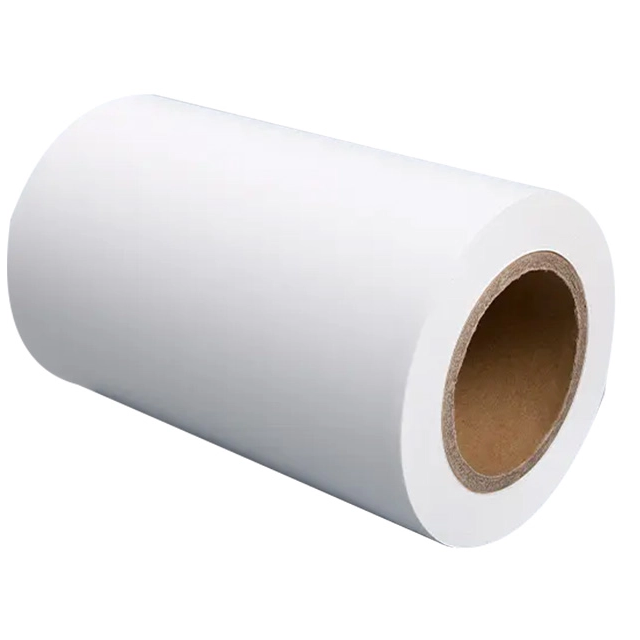
Base material selection dictates your overall success. You should compare substrates strictly on performance outcomes. Look at tensile strength. Evaluate surface smoothness. Test moisture resistance rigorously. Assess die-cutting capability before making a final decision. Every project requires a unique balance of these operational traits.
Let's explore the primary substrate categories driving modern production:
Glassine Paper: This material offers exceptionally high density. It excels during precise die-cutting operations. Manufacturers appreciate its semi-transparent nature. The transparency aids optical sensors during automated dispensing. It handles silicone coating efficiently.
Supercalendered Kraft (SCK): SCK provides superior tensile strength. It dominates North American markets. High-speed automated web processing relies heavily on SCK. It resists snapping under extreme mechanical tension. The calendering process creates a smooth surface ideal for even silicone distribution.
Polycoated Kraft (PCK): PCK incorporates a distinct polymer layer. This extrusion creates high moisture stability. It resists curling in humid environments. You should choose PCK when pairing liners with wet adhesives or when shipping products through diverse climate zones.
Film Liners (PET/PP): Sometimes paper cannot meet your demands. Film liners step in for extreme scenarios. They provide an ultra-smooth surface for specialized adhesives. Clean-room environments require film to eliminate particulate dust. They also offer extreme tear resistance for medical transdermal patches or advanced electronics.
Substrate Performance Comparison Chart
Substrate Type | Tensile Strength | Moisture Resistance | Die-Cutting Precision | Primary Application Scenario |
|---|---|---|---|---|
Glassine | Medium | Low | Excellent | Automated labeling, transparent inspection |
SCK | High | Medium | Good | High-speed web processing, North American standard |
PCK | High | Excellent | Good | Humid environments, wet adhesives |
Film (PET/PP) | Extreme | Extreme | Moderate (Requires special tooling) | Clean-rooms, electronics, ultra-smooth adhesives |
Choosing any release paper blindly leads to manufacturing bottlenecks. Always map the substrate directly back to the physical demands of your assembly line.
Your sizing strategy directly impacts production efficiency. Map your format choices carefully to your manufacturing setup. Consider the end-user workflow just as seriously. The wrong format stops automation tracks completely.
Roll formats dominate automated environments. Manufacturers typically choose between master rolls and custom slit widths. Master rolls suit large-scale converters managing massive runs. Slit rolls feed directly into specialized application machinery. You must verify critical roll specifications early. Check the core size first. Most industrial machines require exact 3-inch or 6-inch cores. A mismatch here delays production for days. You also need to confirm the maximum outer diameter (OD). Exceeding OD limits causes machine jamming because the roll becomes too heavy for the feeding spindle. Splice limits represent another crucial factor. Too many splices weaken the roll. They trigger automated machinery faults and optical sensor errors. Require strict splice limits from your vendor contracts.
Sheet formats serve an entirely different purpose. They accommodate manual processing and high-precision work. Pre-cut sheets support commercial craft industries beautifully. Diamond painting enthusiasts rely heavily on them to protect unfinished canvases. Bespoke decal makers need sheets for accurate retail layering. End-users face specific pain points. They demand easy handling. They require strict lay-flat characteristics. Curling edges ruin precise craft projects. Many crafters debate using standard release sheets versus washi tape for sectioning artwork. Washi tape occasionally leaves sticky residue. Purpose-built silicone sheets guarantee a clean peel every time. This elevates the end-user experience drastically.
Release force defines the physical effort required to peel the liner. The industry scales this force across three distinct levels. We classify them as Easy, Medium, and Tight release. You must pair the release force directly to the adhesive's aggressiveness. Counterintuitively, very aggressive, high-tack adhesives require an easy release liner. This combination prevents the paper from tearing during removal. Conversely, low-tack adhesives need a tight release. A tight release stops the liner from falling off prematurely during transit. Ignoring this delicate balance ruins product usability.
Next, consider the coating application type. Single-sided silicone coating works flawlessly for most standard labels and decals. Double-sided coating becomes mandatory in specific overlapping scenarios. Rolled double-sided tapes require silicone on both sides of the liner. Overlapping industrial storage materials also need double-sided protection. This prevents stored sheets from fusing together over time. Composite manufacturing relies on double-sided liners to handle prepreg fiberglass materials without contamination.
Opacity and light transmittance frequently dictate niche material choices. Many manual applications require intense visual inspection. Substrate opacity directly affects usability here. Medical inspection workflows often utilize backlighting to check fluid levels or sensor placement. Niche crafting relies on LED light pads for precise placement of microscopic gems. If your paper blocks too much light, workers cannot see critical alignment marks. Semi-transparent glassine often solves this problem perfectly. It allows optimal light transmission while maintaining structural integrity.
Finding a reliable release paper supplier reduces long-term operational risk immensely. You should implement strict vetting procedures before finalizing any procurement contracts.
Compliance and documentation protect your business legally and operationally. Always request a Technical Data Sheet (TDS). The TDS outlines exact physical properties, including tensile strength and silicone coat weight. You also need the Material Safety Data Sheet (MSDS). These documents confirm environmental compliance. They verify workplace safety standards. They prove the supplier actually understands technical manufacturing requirements rather than just acting as a middleman.
Prototyping prevents catastrophic bulk errors. Never buy bulk materials without testing them thoroughly. Outline a standardized testing protocol for your engineering team. Conduct climate testing to check for humidity-induced curling. Perform accelerated age testing in industrial ovens. This helps identify "silicone lock-up." Lock-up occurs when the adhesive chemically bonds to the silicone over time, rendering the product useless. Finally, run die-cut testing on your actual production machines to verify clean striking.
Supply chain realities ultimately dictate vendor viability. Evaluate suppliers based on Minimum Order Quantities (MOQs). Unreasonably high MOQs tie up your working capital. Review their lead times for custom slitting and sheeting services. Delays here halt your entire production line. Ask detailed questions about their quality control metrics. They must maintain consistent GSM and caliper tolerances across multiple separate batches. Inconsistent batches lead to constant, frustrating machine recalibration.
Specifying release materials requires carefully balancing adhesive chemistry, processing equipment limits, and the end-user environment. Treating this component as an afterthought guarantees mechanical failures and customer frustration. The right substrate ensures clean die-cutting, reliable automation, and smooth manual application.
To move forward effectively, follow these action-oriented steps:
Audit your current production lines to identify where web breaks or die-cutting failures occur most frequently.
Review your adhesive's tack profile to ensure you are using the correct release force (Easy, Medium, or Tight).
Request updated Technical Data Sheets (TDS) for your existing materials.
Order targeted prototype samples to conduct accelerated aging and humidity tests before your next bulk purchase.
A: A general rule of thumb equates 1 mil (caliper) to roughly 25.4 microns. However, you cannot directly convert GSM (weight) to caliper (thickness) without knowing the paper's density. Highly compressed papers like glassine have a high GSM but a thin caliper. Always check the manufacturer's Technical Data Sheet for exact measurements rather than relying purely on conversion math.
A: Reusing liners presents significant risks. Silicone coatings wear down unevenly after the first peel. This degradation drastically alters the release force. Furthermore, exposed liners attract airborne dust and contaminants. This contamination ruins the adhesive upon reapplication. While crafters reuse sheets for short-term sectioning, industrial environments should always use virgin materials to guarantee performance.
A: This typically results from "silicone lock-up." Lock-up happens when the adhesive chemically migrates into the silicone layer over time. It can also occur if you mismatch a high-tack adhesive with a tight-release liner. Finally, check the material's shelf life. Expired silicone coatings lose their non-stick properties, causing the paper to bond permanently to the adhesive.
A: Single-sided paper features a silicone coating on only one surface. We use it for standard labels, stickers, and single-wound tapes. Double-sided paper has silicone applied to both faces. We require double-sided liners for self-wound double-sided tapes, overlapping industrial materials, or any application where the adhesive might touch both sides of the backing during storage.


