


Views: 0 Author: Site Editor Publish Time: 2026-08-30 Origin: Site


Selecting the wrong release liner directly impacts your daily production efficiency. It frequently leads to severe web breaks. You might also encounter matrix stripping failures during operations. Adhesive transfer issues often plague high-speed converting processes. These mechanical disruptions waste valuable material rapidly. They also delay critical supply chain shipments.
Glassine serves as the definitive industry standard for roll-to-roll applications. It provides exceptionally high density. It also delivers an ultra-smooth surface for uniform coating. However, procuring the correct material configuration requires careful technical alignment. You must match specific liner parameters to your unique adhesive. You also need to align these choices with your die-cutting hardware capabilities.
This comprehensive guide breaks down critical evaluation criteria. It helps you select the optimal glassine liner. Procurement managers and engineering teams will learn to balance pure performance with compliance. You will discover practical methods to boost converting efficiency immediately. We will show you how to avoid costly downtime altogether.
We must define the baseline performance of these specific substrates. Glassine gains its core technical advantages through extreme calendering. Heavy steel rollers compress raw paper fibers under immense mechanical pressure. This intense manufacturing process produces a distinctly high-density material profile. It features exceptionally low porosity overall. It also creates an ultra-smooth surface across the entire web. This smooth finish ensures highly uniform silicone coating application. Consistent silicone distribution strictly prevents unwanted adhesive bleeding. Converters rely entirely on this chemical uniformity for precise label extraction. Standard glassine release paper provides highly predictable mechanical behavior consistently.
Next, you must carefully consider optical dispensing readiness. Modern automated labeling lines depend heavily on photoelectric sensors. These sensitive optical devices detect microscopic gaps between individual labels. They require a somewhat translucent liner for accurate light transmission. Glassine offers excellent natural transparency for this exact industrial purpose. Opaque liner materials often confuse standard optical sensors. Confused sensors cause misaligned labels. They also trigger frustrating dispensing jams frequently. High-speed logistics centers demand seamless optical recognition capabilities continuously. Transparent liners keep fast-moving consumer goods flowing steadily along conveyor systems.
We need to compare different material matrices objectively. Distinct liner materials suit entirely different operational environments.
Performance Comparison Matrix
| Material Type | Primary Advantages | Best Application Scenarios | Known Limitations |
|---|---|---|---|
| Glassine | Superior for high-speed dispensing. Supports precise die-cutting. Environmentally recyclable base material. | Automated labeling, logistics barcodes, standard medical tapes. | Highly sensitive to ambient moisture. Edges curl in damp environments. |
| PE (Polyethylene-coated) | Outstanding moisture resistance. Excellent dimensional stability under stress. | Harsh outdoor applications, wet environments, heavy-duty industrial usage. | Thicker profile reduces labels per roll. Lower environmental recyclability rates. |
| Kraft (CCK) | Exceptional lay-flat properties. Resists curling effectively during handling. | Graphic arts, sheet-fed applications, large-format custom decals. | Lacks transparency required for standard photoelectric dispensing equipment. |
Glassine clearly excels during high-speed automated dispensing runs. It handles intricate die-cutting pressure exceptionally well. Furthermore, the base material remains inherently recyclable. Polyethylene-coated liners offer superior moisture resistance instead. They provide strong dimensional stability for challenging wet environments. We openly acknowledge glassine struggles in highly humid outdoor settings. Clay-coated kraft works far better for lay-flat sheet applications. Graphic arts usually require flat unbound sheets. Glassine tends to curl unpleasantly when left in loose sheet forms.
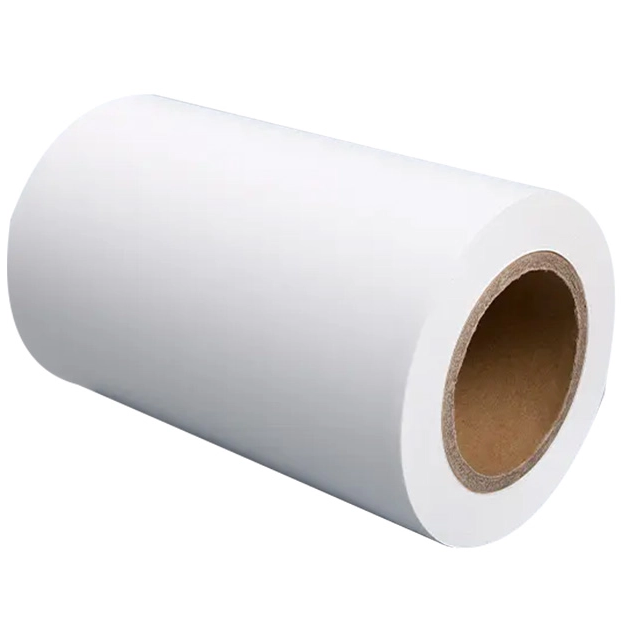
Evaluating your targeted glassine release paper specifications prevents costly manufacturing errors. You must establish a strict grammage selection framework early. Grammage directly dictates total paper thickness. It also governs overall mechanical web strength.
Lightweight options generally range between 40gsm and 50gsm. They provide a highly cost-effective material solution. Standard retail labels often utilize these thinner substrates. Thinner liners allow more usable labels per single roll. This compact sizing reduces changeover frequency on active labeling machines. However, lightweight liners tear quite easily under high web tension.
The core industry standard remains heavily concentrated around a specific weight. Converters universally consider 58gsm glassine release paper the perfect functional sweet spot. It offers an optimal tensile-to-weight ratio for daily operations. Logistics barcodes rely heavily on it. Medical tapes demand this exact specification frequently. Fast-moving consumer goods require this precise physical balance. It withstands rapid matrix stripping safely without tearing. It also maintains excellent optical transparency for sensor scanning.
Heavyweight options span broadly from 60gsm up to 120gsm. These robust thicker liners handle intense industrial die-cutting forces. Double-sided tapes demand extremely high liner stiffness. Thick liners prevent deep die strikes from penetrating completely.
Release force formulation requires your absolute attention. You must map specific release profiles to your chosen adhesives accurately.
Misaligned release forces create significant long-term production risks. "Lock-up" occurs when the chemical release force feels too tight. The label inevitably tears during attempted removal. Conversely, "premature dispensing" happens when the peeling force remains too loose. Labels simply fall off the liner inside the internal printer housing. These chemical properties shift drastically over time as adhesives age.
You must also choose between single-sided and double-sided coating applications. Most common applications require standard single-sided liners exclusively. Typical shipping labels use a simple single-sided coating. Standard medical wound dressings only need one active release surface.
You should specify double-sided coating for complex multi-layer laminates. Self-wound industrial tapes require very specific differential release levels. One side intentionally needs a tighter release than the opposite side. This engineered differential prevents the tape from sticking to itself permanently. It guarantees smooth unrolling behavior during final application.
High-speed die-cutting places immense mechanical stress on the paper web. The liner constantly acts as a hard anvil during cutting processes. The metal blade must sever the face stock cleanly. It must never puncture the delicate glassine backing underneath. Poor overall tensile strength leads directly to matrix snapping. Inconsistent caliper thickness causes highly uneven die strikes across the roll. These physical failures force immediate machine downtime routinely. Operators waste countless hours rethreading broken webs manually. You must audit base liner strength before scaling up production.
Moisture sensitivity presents another major daily operational reality. Glassine reacts very quickly to ambient humidity shifts. The natural cellulosic fibers absorb moisture from the air rapidly. This rapid moisture absorption causes the paper structure to expand. Uneven expansion leads directly to severe surface wrinkling. Exposed edges often curl upward in damp industrial conditions. Curled paper edges jam automated label applicators constantly.
Proper environmental storage mitigates these moisture risks effectively. We recommend following these strict warehouse protocols.
Regional market dynamics influence total material availability heavily. North American packaging markets currently face unique supply constraints. European and Asian manufacturing facilities completely dominate global glassine production. International shipping delays disrupt domestic converting schedules frequently. Procurement teams must proactively plan longer lead times accordingly.
Sustainability compliance now drives corporate purchasing decisions strongly. Environmental, Social, and Governance mandates require strict data reporting. Major global brands increasingly demand precise Forest Stewardship Council certification. This certification guarantees highly sustainable raw material sourcing practices. True repulpability represents another rapidly growing corporate necessity. Repulpable silicone coatings allow much easier paper recycling later. You must confirm compliance documentation upfront during vendor selection. Ignoring modern ESG requirements severely limits future market access.
Partnering securely ensures long-term manufacturing stability. Quality assurance protocols and testing methods matter most. Demand comprehensive Certificate of Analysis reports consistently. These detailed reports must accompany every single roll delivery.
Review the exact coat weight data carefully upon receipt. Ensure the actual release value consistency falls within acceptable tight tolerances. Check the reported tear strength metrics across both machine directions. Facilities lacking rigorous documentation introduce unacceptable production risks. You simply cannot manage output quality without verified testing data.
Custom formulation capabilities differentiate truly strong manufacturing partners. Standard off-the-shelf release profiles fail to match complex proprietary adhesives. A highly competent supplier adjusts silicone curing levels dynamically. They tailor the exact release force for your unique chemical formulations. This technical flexibility supports innovative new product development seamlessly.
Supply chain resilience requires thorough upfront capability assessment. You must evaluate standard order lead times accurately. You also need to assess geographic shipping constraints fully. Clarify minimum order quantities before ever signing binding supply contracts. Excessively high minimums tie up valuable working capital unnecessarily. Regional warehousing capabilities mitigate global shipping delays effectively. Localized inventory keeps your specific production lines running smoothly. A reliable glassine release paper supplier maintains buffer stocks locally.
Prototyping represents the final crucial supplier vetting stage. Trustworthy manufacturing partners actively encourage early pilot testing. They willingly provide trial sample rolls for your specific converting equipment. Never commit to large-scale procurement blindly based on pricing alone. Run several live machine trials first. Measure dynamic web tension parameters precisely. Verify precise die-cutting accuracy during high-speed runs. Observe the matrix stripping behavior closely at maximum rated machine speeds. You must validate these physical metrics before authorizing full commercial rollouts.
Selecting the right functional liner moves far beyond basic unit costs. It demands a strict ongoing focus on total operational efficiency. You must minimize sudden web breaks to protect vital profit margins. Optimizing optical dispensing speeds increases your daily production output substantially. Ensuring proper chemical adhesive compatibility strictly prevents catastrophic product failures in the field. Your initial material choice directly influences every downstream automated labeling process.
Take immediate technical action to secure your future production lines. Audit your current mechanical converting speeds today. Document your specific adhesive chemistries accurately in a central database. Next, request targeted technical data sheets from your shortlisted vendors. Ask for A4 flat samples and full trial rolls promptly. Conduct thorough live machine trials to verify actual real-world performance. Use these rigorous physical tests to confirm theoretical specifications completely.
A: The difference relies entirely on the final application split. Single-sided liners feature active silicone on only one surface. They support standard labels perfectly. Double-sided liners feature silicone layers on both flat surfaces. Manufacturers use them primarily for self-wound industrial tapes. They require specific differential release forces on each side. This differential prevents the tape from blocking or permanently sticking together.
A: It provides the exact functional balance of required tensile strength. High-speed matrix stripping directly demands this robust structural integrity. Meanwhile, it remains thin enough to maximize total usable labels per roll. This specific thickness greatly reduces frustrating machine changeovers. It also consistently maintains excellent light transparency for automated optical dispensing sensors.
A: The objective reality is somewhat mixed currently. The raw cellulose base paper remains highly recyclable inherently. However, the cured silicone coating complicates the traditional municipal recycling process. Modern recycling facilities require advanced mechanical technology to separate them. Look for proactive suppliers offering specific repulpable silicone coating technologies. You can also actively seek out dedicated commercial take-back recycling programs.


