


Views: 0 Author: Site Editor Publish Time: 2026-10-07 Origin: Site


Specifying the wrong basis weight directly correlates with production downtime, die-cutting failures, and compromised end-user applications. When high-speed manufacturing lines grind to a halt, the resulting financial impact extends far beyond the initial raw material purchase price. Procurement teams frequently prioritize roll yield—measured in square meters per roll—to aggressively drive down costs. However, technical buyers must carefully balance this perceived cost saving with essential properties like dimensional stability, optimal web tension, and necessary material stiffness. Overlooking these technical factors routinely leads to severe manufacturing bottlenecks and rejected product batches.
This guide provides a robust, technical framework for evaluating and specifying the exact specifications your production demands. We will help you eliminate dangerous guesswork from your complex procurement process. You will learn how substrate properties interact with conversion machinery, ensuring you make informed, profitable sourcing decisions every time.
Your material specifications connect directly to your bottom line and your customer's satisfaction. End-users immediately notice curling labels, peeling edges, or jammed application machines. A poorly chosen release paper basis weight creates hidden factory inefficiencies. Let us examine how physical mass influences your daily machine performance.
High-speed coating and laminating lines exert massive physical force on moving webs. Heavy materials handle aggressive tension profiles effortlessly. They resist stretching and maintain consistent alignment. Lighter weights often snap under similar stress. Web breaks halt production completely. Operators must then rethread the entire machine, wasting precious time, labor, and expensive raw materials.
Precision die-cutting requires exact anvil pressure management. The physical thickness and density of the paper dictate this critical pressure profile. If your liner runs too light, the die easily cuts entirely through the material. We call this a catastrophic liner strike. If it runs too heavy, it rapidly accelerates tool wear. You will find yourself replacing expensive rotary dies far more frequently than budgeted.
Auto-dispensing machinery demands specific rigidity to function correctly. Basis weight directly determines this essential stiffness. If a liner lacks structural stiffness, labels curl prematurely during application. They might even jam the dispensing equipment entirely. You must ensure the liner supports smooth, predictable peel angles when the face stock separates from the base.
Substrate chemistry heavily influences how a paper handles physical weight. You cannot evaluate a grammage number in complete isolation. Different manufacturing processes create vastly different densities, surface profiles, and performance limits. We categorize these solutions to help you match materials to machinery.
Manufacturers heavily calender these papers for maximum internal density. They typically range from 50gsm to 90gsm. You will find them ideal for rapid roll-to-roll label applications. They excel in high-volume automated dispensing environments. Buyers should always focus on high density over raw thickness when evaluating SCK options.
These sheets feature a specialized clay coating to improve surface smoothness. Their weights generally span between 70gsm and 130gsm. They provide excellent dimensional stability under severe thermal stress. They work beautifully for demanding graphic arts and medical tapes. You need CCK when exceptional silicone holdout remains a critical production requirement.
Mills extrude a thin polymer layer onto these resilient kraft bases. They usually range from 80gsm up to 140gsm or more. They dominate heavy-duty industrial applications. For example, a 115gsm PCK release paper serves as a reliable industry standard. You will see it constantly in wide-format graphics and automotive decals. It delivers superior lay-flat characteristics and acts as an exceptional moisture barrier.
| Substrate Type | Typical Weight Range | Best Suited For | Key Characteristic |
|---|---|---|---|
| Glassine / SCK | 50gsm – 90gsm | Roll-to-roll labels, automated dispensing | High density, excellent die-cutting |
| Clay Coated Kraft (CCK) | 70gsm – 130gsm | Graphic arts, specialized medical tapes | High thermal stability, smooth surface |
| Polycoated Kraft (PCK) | 80gsm – 140gsm+ | Wide-format graphics, automotive decals | Moisture resistance, strict lay-flat properties |
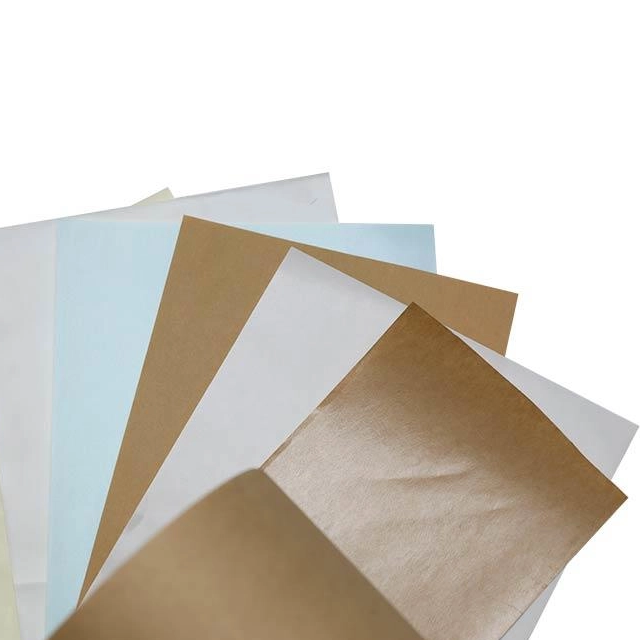
Choosing the right specification requires a highly systematic approach. You must evaluate your specific factory conditions alongside demanding end-user requirements. We recommend following a structured calculation process to prevent costly errors.
Procurement errors often compound over time, draining profitability. Let us explore the hidden financial and operational traps of poor specifications. Avoiding these common pitfalls separates expert buyers from novices.
Many buyers pay for structural integrity they simply do not need. You might specify a thick, heavy liner out of pure habit. The result is consistently inflated unit costs across your entire supply chain. You also pay for excessive shipping weight on every single delivery. Evaluate your actual application limits strictly to avoid this common margin killer.
Attempting to save money with a lighter sheet frequently invites disaster. Lighter materials regularly suffer from "tunneling". This happens when the liner separates unevenly from the face stock, creating visible air pockets. You will also see severe edge curl due to ambient moisture penetration. Matrix stripping failures occur rapidly when the liner lacks internal tear strength.
Rotary die-cutting requires incredibly strict mechanical tolerances. The spinning blade must cut the face material perfectly but only kiss the liner lightly. Changing from a 90gsm to an 80gsm paper removes critical microns of thickness. If you switch weights without adjusting your tooling, you will cause catastrophic liner strikes. The die will slice right through the web, ruining the entire production run.
You must transition from theoretical planning to practical validation. We outline the crucial steps for finalizing your procurement decision safely. Never skip these validation protocols when sourcing new materials.
Never evaluate a material solely by its GSM rating. You must read the Technical Data Sheet thoroughly. Look for specific caliper and thickness measurements first. Check the baseline moisture content levels. Review the MD and CD tensile strength ratings carefully. These combined metrics tell the full story of how the paper will behave.
You should always validate new materials on your actual factory equipment. Follow this step-by-step logic for safe implementation:
Your supplier must demonstrate exceptional manufacturing consistency. Can they maintain strict weight tolerances across multiple, distinct production runs? We recommend demanding a tolerance of ± 5% or better. Inconsistent basis weights force your operators into constant machine recalibration, destroying your daily yield targets.
Specifying the perfect release paper basis weight is never about simply finding the cheapest option. It is about discovering the most efficient, reliable material for your specific machinery. You must carefully align the paper properties with the final end-use application to guarantee success.
Matching the proper weight to the correct substrate drives massive efficiency gains across your facility. Specifying a heavy-duty PCK for demanding graphics reduces operational waste significantly. You eliminate rejected batches, minimize machine downtime, and protect your brand reputation. High-quality specifications always outperform perceived raw material savings in the long run.
We encourage you to audit your current liner specifications today. Consult with a specialized technical sales engineer to identify potential performance gaps in your supply chain. Request sample rolls for a comprehensive factory trial, and lock in the most efficient materials for your production lines.
A: GSM stands for grams per square meter, a standard metric measurement used globally. Basis weight in pounds represents the weight of a specific ream of paper cut to a standard size, primarily used in North America. To avoid supply chain confusion, procurement teams should always specify GSM for international orders, as it provides a universal, unambiguous measurement of paper density.
A: Not necessarily. Basis weight measures mass, while caliper measures actual thickness. A highly calendered 80gsm Glassine paper compresses its fibers tightly, resulting in a much thinner sheet than an 80gsm standard uncoated Kraft paper. You must always check the technical data sheet for exact caliper measurements rather than relying on GSM alone.
A: Graphic arts applications require exceptional dimensional stability. Large vinyl decals and plotting films demand superior lay-flat properties. The polyethylene coating on PCK provides a powerful moisture barrier, preventing the paper from curling in humid environments. The 115gsm weight offers the perfect rigidity needed for automated wide-format cutting machines without jamming.
A: No, this is technically impossible without major machine adjustments. These substrates have drastically different densities, surface energies, and thicknesses. A direct swap will cause severe web tension issues and catastrophic die-cutting failures. You would need to completely recalibrate your line tension and invest in new rotary dies to accommodate the thinner Glassine material.


