


Views: 0 Author: Site Editor Publish Time: 2026-09-30 Origin: Site


A pressure-sensitive adhesive (PSA) is a modern manufacturing marvel. However, it remains only as effective as its delivery mechanism. If the adhesive cannot separate properly from its backing, the entire application process fails.
Misalignment in this separation phase brings severe financial and operational risks. You might face unexpected downtime on high-speed dispensing lines. Product degradation and end-user frustration quickly follow. These disruptions erode profit margins and damage brand reputation.
This article provides engineers and procurement teams with a clear evaluation framework. We will explore how to match release profiles to PSA characteristics. You will learn to navigate material choices and minimize production risks effectively.
Correctly calibrating the separation effort between an adhesive and its backing is crucial. We define this effort as release force. When you get this calibration wrong, operational symptoms cascade through the production line.
A tight release profile requires excessive effort to peel the liner away from the adhesive. This condition causes immediate manufacturing bottlenecks. It leads to liner tearing during automated application. You will often see adhesive transfer, where parts of the adhesive remain stuck to the liner. This defect ruins the end product. Furthermore, tight release causes web breaks during the converting process. Manual application becomes frustrating and slow for end-users.
Common Mistake: Relying on a single tight release profile for all product lines to prevent accidental peeling. This overcompensation destroys dispensing speeds.
Conversely, a low release profile presents its own set of dangers. If the liner falls away too easily, you experience premature label dispensing. Operators often call this "label fly-off" on the press. Labels shift during transport, misaligning the final application. Matrix stripping failures also occur frequently. The waste matrix pulls the actual label away with it during converting.
A balanced release profile defines success. The liner must survive the converting process intact. It must withstand transport vibrations and long-term storage conditions. Finally, it must dispense flawlessly at your designated application speed.
You must map the release force to your specific product requirements. Engineers divide these profiles into three distinct categories. Understanding these tiers helps you select the right materials.
Table: Standard Release Force Tiers and Applications
| Release Level | Force Range (g/in) | Best Application Scenarios | Primary Caveats |
|---|---|---|---|
| Easy | 5 - 15 g/in | High-speed automated dispensing, logistics labels, beverage bottling. | High risk of pre-dispensing if the adhesive coat weight fluctuates. |
| Medium | 15 - 50 g/in | General purpose tapes, manual application labels, consumer goods. | Requires tight control over silicone curing to maintain consistency. |
| Tight | 50+ g/in | Double-sided tapes, heavy-duty industrial adhesives, small manual peel parts. | Can cause paper tear if the liner substrate lacks internal strength. |
Easy release profiles suit high-speed automated dispensing environments perfectly. Think of logistics labels scanning down a high-speed conveyor. Beverage bottling lines also demand these profiles. The label must snap off the liner in milliseconds. However, you face a high risk of pre-dispensing. If your adhesive coat weight fluctuates even slightly, labels will fly off prematurely.
Medium profiles serve as the industry standard for general-purpose applications. They work well for consumer goods packaging and manual application labels. They strike a comfortable balance for human hands. The primary caveat involves manufacturing precision. You require tight control over silicone curing to maintain this mid-range consistency.
Tight profiles handle demanding, specific tasks. They are essential for double-sided tapes utilizing differential release liners. Heavy-duty industrial adhesives need them. Small components requiring manual peeling also benefit. The danger lies in substrate failure. Tight peeling can cause paper tear if your liner lacks sufficient internal strength.
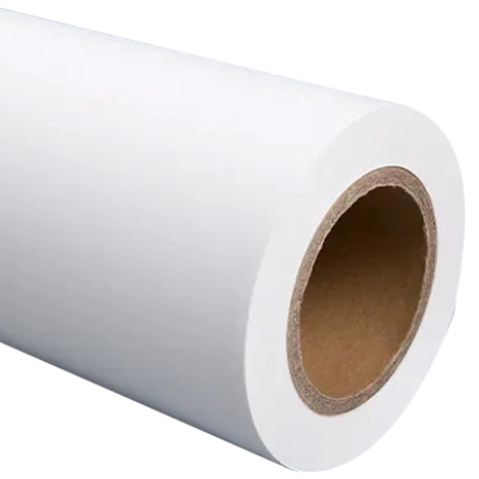
Substrate characteristics dictate the final performance of your adhesive product. Evaluating these trade-offs requires careful attention to material science.
Engineers often specify a glassine release liner for precision applications. Glassine undergoes heavy supercalendering. This process creates a highly densified, smooth surface. It provides excellent silicone hold-out. The silicone sits cleanly on top rather than soaking into paper fibers. Therefore, glassine remains the industry standard for precision die-cutting.
We must compare glassine against other popular substrates to understand its true value.
You should follow a structured decision path when evaluating substrates.
Choose glassine when die-cutting precision and cost-efficiency outrank extreme moisture resistance.
You cannot rely on vendor promises alone. Evidence-oriented evaluation requires strict testing protocols. You must verify how the release paper release force performs under actual conditions.
Always demand testing data aligned with recognized global protocols. FINAT and ASTM provide the benchmark frameworks. You should ask for FTM 3 (low-speed release) and FTM 4 (high-speed release) data. In North America, ASTM D3330 serves as the guiding protocol. These standards ensure testing consistency across different laboratories.
Release force is never static. It behaves dynamically based on peeling speed. You must test at low speeds representing manual peeling. This usually hovers around 12 inches per minute. Crucially, you must also test at high speeds. Automated lines often exceed 300 feet per minute. A liner performing well at manual speeds might lock up entirely on a fast conveyor.
Best Practice: Always provide your supplier with your exact dispensing speed before requesting material samples.
The chemistry of your PSA interacts continuously with the silicone layer. Assess how tackifiers or plasticizers migrate over time. These migratory components can seep into the silicone matrix. This migration alters the separation effort drastically. You must understand this chemical interplay to avoid long-term failures.
Procuring the right material represents only the first step. Post-procurement realities often introduce unexpected variables onto the production floor.
Separation effort typically increases over time. Industry experts call this phenomenon silicone lock-up. As the adhesive cures and ages, it forms a tighter bond with the liner. Suppliers must provide aged release data. Never accept only initial peel metrics. Demand tests conducted after 7 days at elevated temperatures. This simulates long-term storage stress accurately.
Storage conditions heavily influence material stability. Variations in plant humidity change the moisture content of paper liners. Temperature spikes accelerate adhesive flow. These environmental shifts temporarily alter the release paper release force. A roll stored next to a hot loading dock will perform differently than one kept in a cool warehouse.
You must establish strict shelf-life expectations. Implement climate-controlled storage protocols for all unapplied stock. Rotate your inventory using a First-In, First-Out (FIFO) method. Educate your warehouse staff on the sensitivities of adhesive materials.
Finalizing your vendor decision requires technical scrutiny. You need partners who understand manufacturing complexities.
Demand complete technical transparency. Look for suppliers who provide comprehensive specification sheets. These sheets must detail the base weight of the paper. They should list the exact silicone coat weight. Furthermore, they must outline tiered force tolerances. Vague specifications lead to inconsistent batches.
Never scale production without a trial run. You must mandate a prototyping phase. Request roll samples from your shortlisted suppliers. Run these samples on your actual converting equipment. Dispense them at true production speeds. This physical trial reveals flaws a spec sheet might hide.
Frame your technical inquiry precisely. Detail your adhesive chemistry, face stock, and dispensing speed. Contact a qualified converter to request a custom sample kit based on these exact parameters. Stop asking for "standard liners" and start asking for engineered solutions.
Optimizing the separation profile is a customized balancing act. You must align adhesive chemistry, liner material, and application speed perfectly. Generic materials rarely solve complex manufacturing challenges.
We encourage technical buyers to move beyond basic material requests. Engage your suppliers with specific end-use criteria. Demand aged testing data and precise substrate tolerances. This proactive approach secures long-term product reliability.
Take action today. Request an engineering consultation or a material sample kit. Test specific release profiles on your machinery to guarantee flawless application.
A: Industry standard test methods include FINAT (FTM 3 and FTM 4) and ASTM D3330. These protocols define the exact parameters for testing. They emphasize specific peel angles (typically 90 or 180 degrees) and standardized peeling speeds to ensure consistent, repeatable measurement data across different laboratories.
A: Temperature significantly impacts performance. Heat causes the adhesive to soften and flow. It can also accelerate chemical interactions between the adhesive and the silicone layer during storage. This process often leads to tighter release profiles over time, increasing the required peeling effort.
A: Double-sided tapes require a differential liner to function. The liner must have an "easy" release side and a "tight" release side. This engineering ensures the tape unwinds cleanly from the roll without exposing the wrong adhesive face prematurely during application.
A: Yes. Heavier adhesive coat weights exert more grip on the liner. They generally require stronger silicone formulations to maintain the same perceived separation effort. If you increase coat weight without adjusting the liner chemistry, you risk severe dispensing failures.


