


Views: 0 Author: Site Editor Publish Time: 2026-08-26 Origin: Site


Submitting a vague Request for Quote (RFQ) for release liners guarantees one of three poor outcomes. You might receive inaccurate pricing. You could face delayed procurement cycles. Worst of all, you might end up with a material that fails catastrophically during high-speed die-cutting.
Because Clay Coated Kraft (CCK) relies on a delicate physical balance between its clay sealing layer and the silicone release layer, manufacturers simply cannot guess your application requirements. The substrate must align perfectly with your chosen adhesive type, conversion equipment, and end-use environment.
To secure accurate bids and procure highly reliable materials, buyers must build RFQs around precise physical, chemical, and operational parameters. Here is the exact framework for structuring an airtight cck release paper RFQ that protects your production line from unpredictable material failures.
Before you list technical numbers, you must provide context. Suppliers need to understand the big picture of your manufacturing environment. This context helps them verify chemical compatibility and structural suitability early in the quoting process.
State exactly what the liner will protect. Will it cover a hot-melt adhesive, a solvent-based acrylic adhesive, or a specialized industrial tape? Each adhesive chemistry interacts differently with silicone. If you fail to specify this, the supplier might apply a standard silicone formulation. This often leads to adhesive lock-up, where the label refuses to peel away from the liner. By stating your exact adhesive type, you allow the manufacturer to formulate a perfectly matched release profile.
Detail your specific manufacturing conditions. You must outline the physical journey the paper will take. Mention whether it will undergo high-speed automated dispensing or aggressive rotary die-cutting. CCK is typically chosen because it withstands high temperatures beautifully, but the supplier needs to know if your process involves thermal curing ovens. Give them the maximum temperature ranges the liner will face. This prevents the paper from curling or shrinking as it passes through your machinery.
Specify how you will deliver the final product to your end-user. Will it arrive in flat individual sheets or continuous wound rolls? This distinction matters greatly. Sheeted applications require extreme stiffness and excellent lay-flat characteristics. If you plan to sheet the product, the manufacturer must tightly control the moisture profile of the paper to prevent edge curling. Conversely, continuous roll applications prioritize tensile strength to handle web tension.
Once the supplier understands your application, you must define the physical dimensions and structural integrity of the base paper. Vague dimensions result in rolls that do not fit your equipment.
Specify the exact basis weight you need, followed by the acceptable tolerance. Common CCK weights range from 50gsm to 150gsm. For example, if your application requires a 60gsm cck release paper, state clearly whether a ±2% or ±5% variance is permissible for your machinery. Tighter tolerances usually command higher minimum order quantities, but they ensure consistent die-cutting depth.
Provide detailed sizing for the finished rolls. You must specify:
Define the core inner diameter. Most industrial machines use a standard 3-inch or 6-inch core. Furthermore, specify the core material. Cardboard is standard, but if you operate a medical or cleanroom facility, you must mandate plastic cores to eliminate airborne dust generation.
Request baseline minimums for web strength. You need specific values for Machine Direction (MD) and Cross Direction (CD) tensile strength. High MD tensile strength prevents web breakage during high-speed unwinding. Additionally, specify minimum tear resistance to ensure the matrix strips away cleanly during the conversion process.
Table 1: Typical Dimensional Specifications Checklist for an RFQ
| Specification Parameter | Standard Unit of Measure | Example Requirement | Why It Matters |
|---|---|---|---|
| Basis Weight (Grammage) | gsm (g/m²) | 80gsm ± 3% | Dictates liner stiffness and die-cutting depth. |
| Roll Width | mm or inches | 1040mm ± 1mm | Ensures proper alignment on slitting/printing machines. |
| Outer Diameter (OD) | mm | Max 1000mm | Must fit the physical constraints of the unwinder. |
| Core Inner Diameter | inches | 3-inch (76mm) | Must match the chuck size of your converting equipment. |
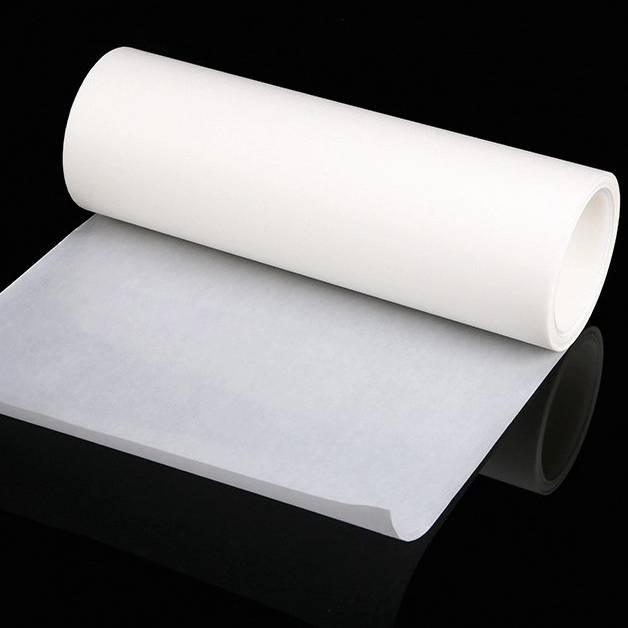
The silicone layer is the functional heart of the release liner. If you write a loose specification here, you risk complete product failure.
Explicitly state whether you need single-side or double-side silicone coating. Double-sided coatings are common for industrial double-sided tapes. If you request double-sided paper, you must specify if differential release forces are required. A common setup features a tight release on one side to hold the tape structure, and an easy release on the other side so the user can unwind it smoothly.
Define your required peel adhesion value. Industry standards often measure this in grams per 25mm (g/25mm) or Newtons per meter (N/m). Do not just say "easy release." Instead, categorize your target clearly:
Detail the exact silicone chemistry you require. You can choose from solvent-based, solvent-less, or emulsion silicone systems. Solvent-less systems are increasingly preferred for environmental compliance and lower volatile organic compound (VOC) emissions. However, if you are bonding heavy-duty industrial adhesives, you may still need solvent-based silicone for its superior anchorage and cross-linking density.
Never skip the SAR specification. SAR measures how much the silicone coating transfers onto your adhesive. If silicone migrates, it kills the tackiness of your adhesive. Request a minimum SAR percentage of at least 85% (measured via FINAT test method FTM 11). This ensures the silicone stays anchored to the paper and does not compromise your final product.
Reliable manufacturing requires consistent raw materials. Your RFQ should explicitly outline the environmental and surface tolerances you expect from every batch.
CCK paper relies heavily on ambient humidity remaining stable. Specify acceptable moisture content percentages—usually around 4% to 6%. If the paper arrives too dry, it becomes brittle. If it arrives too wet, it absorbs more moisture on your factory floor, causing severe edge curling. By mandating a tight moisture window, you prevent dimensional shifting during transport and storage.
Outline your strict expectations for the clay coating layer. The entire purpose of the kaolin clay is to seal the porous kraft paper, preventing the expensive silicone from sinking into the fibers. Poor clay coating leads to silicone starvation on the surface, which causes inconsistent release forces. Request a high smoothness rating (often measured using the Bekk smoothness test) to ensure a flawless silicone foundation.
Modern supply chains demand strict transparency. If applicable to your market, demand compliance documentation within the RFQ itself. Common requirements include:
Sending a well-crafted RFQ is only half the battle. You must critically evaluate how the manufacturers reply. Their initial response often reveals their technical competence.
A qualified cck release paper supplier will not just reply with a simple price list. They will respond with a comprehensive Technical Data Sheet (TDS) and Material Safety Data Sheet (MSDS). These documents must directly match your requested cck release paper specifications. If they omit critical test values like tensile strength or SAR, consider it a warning sign.
Look for suppliers who propose a logical scale-up process. They should offer A4 sheets for initial lab testing first. Once you approve the lab sheets, they should provide trial slit rolls for a pilot run on your actual machinery. Never accept a quote from a supplier who demands a full Minimum Order Quantity (MOQ) commitment before you run a live machine trial.
Evaluate their proposed logistics. Paper is heavy and sensitive to moisture. The supplier must outline their packaging methods clearly. They should use moisture-barrier shrink wrap to protect the rolls during transit. They must also specify pallet orientation (e.g., stacked horizontally or suspended vertically) to prevent core crushing. Finally, ensure they provide guaranteed lead times for standard runs versus custom-slit widths.
Disqualify any quotes that promise "universal compatibility." No single release liner works perfectly for every adhesive. If a supplier promises a universal solution without asking detailed questions about your specific adhesive chemistry or die-cutting setup, they lack the technical depth required to support a modern manufacturing operation.
An effective RFQ fundamentally changes how you interact with suppliers. It shifts the conversation away from generic pricing negotiations and focuses entirely on specific material performance. By detailing the substrate mechanics, coating technology, and dimensional tolerances upfront, you eliminate costly guesswork.
Your next step is straightforward. Compile all these discussed specifications into a standardized spreadsheet or PDF checklist. Whenever possible, attach the technical data sheets for your specific adhesive. Distribute this comprehensive package to a shortlisted group of vetted manufacturers. This disciplined approach guarantees you will receive accurate bids and allows you to transition smoothly into the sample-testing phase.
A: Glassine is super-calendered for high density. It lacks a clay layer and works best for standard roll-to-roll label applications. CCK features a kaolin clay layer on top of a kraft base. This clay provides superior dimensional stability and lay-flat properties, making CCK the better choice for sheeted applications or environments prone to moisture fluctuations.
A: Minimum order quantities vary based on customization. Standard basis weights, such as 60gsm or 80gsm, typically have lower MOQs around 1 to 2 tons. However, if your RFQ demands highly custom release forces, specialized silicone formulations, or uncommon master roll widths, suppliers often require commitments of 3 to 5 tons.
A: Different adhesives interact uniquely with silicone coatings. A rubber-based hot melt requires a completely different release profile than a highly aggressive solvent acrylic. If the supplier does not know your exact adhesive, they cannot formulate the correct release force. This miscalculation inevitably leads to severe adhesive lock-up or premature peeling during conversion.


