


Views: 0 Author: Site Editor Publish Time: 2026-09-26 Origin: Site


For label manufacturers and die-cutters, the physical condition of arriving release liners holds equal importance to the manufacturing quality itself. At 58gsm, this paper represents a lightweight, highly calibrated grade. It remains particularly vulnerable during long, complex global shipping routes.
Substandard transit packaging frequently leads to severe moisture ingress, edge crushing, and destructive roll telescoping. These transit-induced damages result in unpredictable web breaks, highly inconsistent release forces, and costly machine downtime. Factory efficiency relies heavily on perfectly intact raw materials arriving at the loading dock.
This evaluation guide defines the non-negotiable packaging protocols needed to protect this specific paper grade. We will carefully detail the core technical specifications you must verify before purchasing. You will also learn practical methods to establish a rigorous framework for vetting any new supplier.
Moisture is the primary enemy: 58gsm glassine requires multi-layer moisture barriers (like PE-coated kraft or VCI film) to prevent silicone coating degradation.
Physical integrity dictates usability: Custom core plugs, edge protectors, and rigid palletization are mandatory to prevent roll deformation during high-speed converting.
Verify specs before purchase: True 58gsm glassine release paper specifications must show tight tolerances in caliper (thickness), tensile strength, and targeted release force (light, medium, or tight).
Supplier vetting requires transit proof: A qualified 58gsm glassine release paper supplier will provide documented packaging SOPs (Standard Operating Procedures) for export alongside technical data sheets.
Lightweight papers offer excellent cost-yield ratios for large label converting operations. A lighter sheet means more linear meters per roll. However, they demand much stricter handling protocols than heavier 80gsm or 90gsm alternatives. At just 58 grams per square meter, the structural threshold for physical stress drops significantly. If logistics fail, 58gsm glassine release paper becomes unusable scrap before you even load it onto your machine.
Glassine features an exceptionally high density. This provides a fantastic, non-porous base for premium silicone coatings. However, excessive humidity during extended sea freight poses massive risks. High moisture causes the paper fibers to swell microscopically. This invisible swelling alters the carefully calibrated release profile.
We often encounter a logistics phenomenon called "container rain." Extreme temperature fluctuations across different global climate zones cause heavy condensation inside metal shipping containers. If water droplets penetrate the roll packaging, the silicone layer degrades rapidly. This chemical degradation causes severe adhesive lock-up. When this happens, the end-user cannot peel the label off the liner.
Common Mistakes in Moisture Management:
Relying on a single layer of thin stretch film for ocean freight.
Failing to use desiccant packets inside the container load.
Storing rolls directly on damp concrete floors upon arrival.
Roll deformation ruins converting efficiency instantly. The primary risks involve edge crushing and roll telescoping. Telescoping happens when individual paper layers slide out of lateral alignment. This shifting creates a cone-shaped, entirely unusable roll.
A deformed edge on a 58gsm roll creates tiny micro-tears. These defects almost always lead to snapping during high-speed tensioned die-cutting. Web breaks force machine operators to stop the press entirely. They must re-thread the delicate matrix and discard meters of ruined material. Preserving the geometric perfection of the roll is absolutely critical.
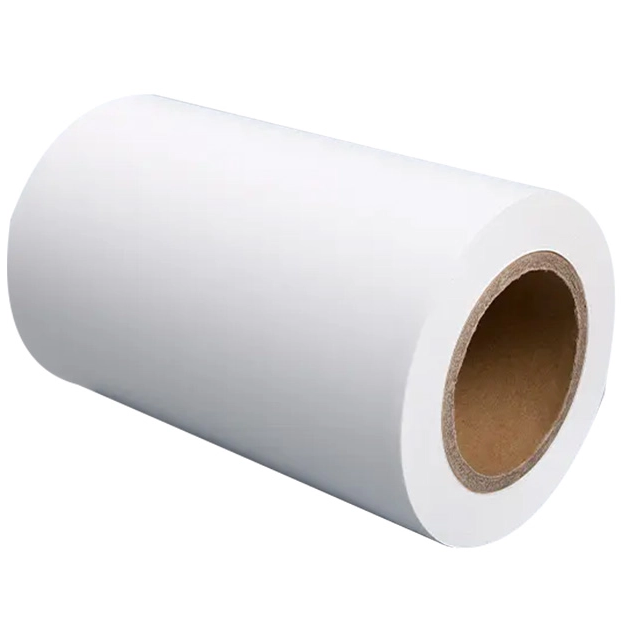
Industry-standard export packaging follows a strict hierarchical protocol. You must ensure the paper arrives in perfect factory condition. A basic pallet wrap never suffices for international sea freight. The protection strategy requires specialized layers designed for specific transit threats.
You need a highly robust multi-layer wrapping system. The inner layer must act as a complete moisture barrier. Premium suppliers typically use tight shrink wrap or heavy-duty PE (polyethylene) film. This plastic layer seals the roll away from atmospheric humidity and container rain.
The outer layer provides essential physical abrasion resistance. High-quality packaging uses thick kraft paper or heavy corrugated wrap. This outer shield absorbs minor physical impacts during forklift handling and container stuffing. Without it, careless forklift tines can easily puncture the waterproof inner layer.
The internal paper core acts as the foundation of the roll. You must specify heavy-duty wooden or rigid plastic core plugs. Factory workers hammer these plugs into the ends of the core. They prevent the inner tube from collapsing under the immense crushing weight of vertically stacked rolls.
V-board edge protectors prove equally critical. Logistics workers strap rolls tightly to pallets to prevent shifting. Without thick V-boards distributing this localized pressure, plastic strapping slices right into the delicate edges of the paper. This creates the exact micro-tears we mentioned earlier.
Standard wooden pallets must strictly comply with ISPM 15 regulations for export. This international standard requires proper heat treatment to prevent global pest infestations. However, standard flat pallets often fail cylindrical loads. Custom-milled wooden pallets designed specifically for roll cradling offer vastly superior stability.
Precise tension strapping locks these cradled rolls to the pallet base. Stretch hooding then covers the entire pallet load from top to bottom. This final layer creates a unified, waterproof, and completely immobilized block. It prepares the paper for the roughest ocean transit conditions.
We must transition from how you protect the material to what exactly you are protecting. What specifically defines a premium 58gsm sheet? Procurement teams must look beyond general weight and scrutinize microscopic tolerances.
Acceptable variance in grammage and thickness (caliper) remains incredibly tight in premium grades. High density serves as an absolute requirement. It prevents expensive liquid silicone from penetrating deeply into the raw base paper during manufacturing. A highly smooth surface ensures an even silicone coat weight across the entire web. We strongly recommend checking the 58gsm glassine release paper specifications on every single batch certificate you receive.
Release force measures how easily the face stock peels away from the liner. Engineers measure this metric in grams per 25mm (g/25mm) or Newtons per meter (N/m). You must perfectly match the release force to your specific adhesive type. Hot melt adhesives behave very differently than aggressive acrylic adhesives.
Manufacturers typically categorize these forces into light, medium, or tight release profiles. If you use a light release liner with a weak adhesive, labels will dispense prematurely inside the printer.
Your paper must survive complex, automated stripping matrices. This requires robust baseline metrics for Machine Direction (MD) and Cross Direction (CD) tensile strength. High MD tensile strength prevents web breaks under heavy mechanical tension. Strong CD tear resistance ensures the web stays intact if a minor edge nick occurs.
Standard Technical Specifications Table
Technical Parameter |
Standard Measurement Unit |
Typical Target Value (58gsm) |
Testing Standard Reference |
|---|---|---|---|
Grammage |
g/m² |
58 ± 2 |
ISO 536 |
Thickness (Caliper) |
μm (microns) |
51 ± 3 |
ISO 534 |
Tensile Strength (MD) |
kN/m |
≥ 5.5 |
ISO 1924-2 |
Tensile Strength (CD) |
kN/m |
≥ 2.5 |
ISO 1924-2 |
Moisture Content |
% |
4.5 - 6.0 |
ISO 287 |
Why should buyers specify glassine over standard calendared kraft (SCK) or clay-coated alternatives at this exact weight? At 58gsm, standard uncalendered papers lack the necessary structural density for high-end applications.
Glassine features a highly compressed, supercalendered internal structure. Heavy steel rollers crush the paper fibers together under immense pressure and heat. This unique manufacturing process creates a harder, much more uniform anvil surface for rotary die-cutting. Ordinary paper contains microscopic peaks and valleys.
The ultra-smooth, uniform density of genuine glassine release paper extends expensive die blade life significantly. Clean, precise cuts prevent label lift during high-speed automated dispensing. When you use inferior paper, blades dull quickly, and labels fail to separate cleanly from the matrix.
Corporate buyers now demand strict ESG (Environmental, Social, and Governance) compliance from their supply chains. High-quality glassine uses 100% virgin wood pulp sourced from responsibly managed forests. Because it relies on extreme mechanical calendering rather than heavy plastic coatings to achieve its density, it offers excellent sustainability metrics.
You can integrate it into standard paper recycling streams much easier than poly-coated (PCW) liners. 58gsm glassine release paper helps packaging brands meet modern circular economy targets without sacrificing converting speed.
Performance Comparison Chart
Performance Metric |
58gsm Glassine |
58gsm Ordinary SCK Paper |
|---|---|---|
Surface Smoothness |
Excellent (Supercalendered) |
Moderate (Standard calendered) |
Die-Cutting Anvil Base |
Hard, uniform, extends blade life |
Softer, uneven, dulls blades faster |
Silicone Hold-Out |
Superior (Low porosity) |
Poor (High absorption rates) |
Recyclability Profile |
High (Mechanical density) |
Variable (Often needs chemical sizing) |
Procurement teams need highly practical steps to validate manufacturer claims before committing to massive bulk orders. You should never rely solely on glossy marketing brochures. True quality reveals itself in operational consistency and transparent documentation.
Do not just ask for a small A4 paper sample. A tiny flat sample cannot demonstrate how a three-ton pallet survives a Pacific typhoon. You must specifically request their standardized export packaging Standard Operating Procedures (SOPs). Ask them to provide historical transit defect rate data.
A highly reputable 58gsm glassine release paper supplier will gladly share their container loading diagrams. They will show you exactly how they strap, wrap, and block the rolls. If they hesitate to share this data, treat it as a major red flag.
You must move beyond laboratory checks and conduct a real-world converting trial. Follow these recommended assessment steps:
Order a full trial master roll: Do not rely on narrow sample strips.
Inspect the arrival condition: Evaluate the packaging at your loading dock. Did the core plugs hold firm? Did the V-board edge protectors survive the strapping tension?
Test custom slitting tolerances: Measure the width of the rolls. A core that measures two millimeters too wide causes disastrous slipping on the rewinder shaft.
Run a high-speed converting test: Monitor the machine for web tension breaks and check the silicone release performance at maximum running speed.
Assess the supplier’s responsiveness during this phase. Their ability to accommodate custom slitting requests and answer technical queries indicates their long-term reliability as a supply chain partner.
Procuring reliable lightweight liners requires a strict, dual-focus approach. First, you must verify the exact technical precision of the base paper itself, ensuring it meets strict caliper and tensile standards. Simultaneously, you must ensure the manufacturer utilizes uncompromising export packaging to protect that exact precision during global transit. Missing either element guarantees production failures.
We highly encourage buyers to actively compare their current supplier's packaging SOPs against the strict standards outlined in this guide. Do not wait for a ruined shipment to force a change. Reach out today to request a comprehensive technical data sheet and schedule a virtual packaging audit with your sales representative. Proactive evaluation secures your production timeline.
A: Logistics labels, medical tapes, consumer goods barcodes, and automated labeling systems commonly use this paper. These advanced applications require thin, high-tensile liners to maximize roll yields and ensure seamless, high-speed dispensing.
A: Shelf life typically spans 6 to 12 months. It must remain in its original moisture-proof packaging. Always store unused rolls in a strictly climate-controlled environment, ideally maintained around 22°C and 50% relative humidity.
A: Yes, it performs exceptionally well. It requires a specialized dual-side silicone coating process. Manufacturers apply differential release forces, such as one tight side and one easy-release side, to ensure proper unwinding.


