


Views: 0 Author: Site Editor Publish Time: 2026-09-14 Origin: Site


Inconsistent release liners carry hidden consequences. You might face sudden adhesive failures during application. You could experience frustrating die-cutting jams on the production floor. These issues ultimately compromise end-product shelf life. Evaluating your liner quality requires moving beyond basic visual inspections. Instead, you need empirical, standards-based testing protocols like FINAT or ASTM. Simply looking at a roll cannot confirm silicone curing levels or moisture content. This guide equips procurement and quality assurance teams. We provide an objective framework for verifying liner quality before you begin mass production. You will learn exactly which tests matter most. We also cover how to interpret technical data correctly. By standardizing your evaluation process, you protect your brand reputation and operational efficiency. Let us dive into the critical metrics defining high-performance mgk release paper.
Release force and residual adhesion rate are the primary indicators of silicone curing quality and base paper compatibility.
Industry-standard testing protocols ensure batch-to-batch consistency and prevent costly manufacturing downtime.
Evaluating core mgk release paper specifications (such as smoothness and basis weight) must align directly with the specific adhesive and die-cutting requirements.
A reliable supplier should provide transparent Certificates of Analysis (COAs) and traceable testing data for every roll.
Skipping rigorous testing creates massive operational vulnerabilities. Your facility relies on predictable material behavior. When base papers lack uniformity, problems multiply quickly across the factory floor.
Uneven silicone coating directly disrupts high-speed converting. Web breaks happen when material tension shifts unexpectedly. Your die-cutting machinery relies on predictable thickness to function smoothly. If the paper gauge varies, blades might slice through the backing. They might also fail to cut the face stock entirely. These misalignments force operators to halt the line continually. Stopping and restarting machinery burns valuable production hours.
Poor curing leads to a destructive phenomenon. Industry professionals call it "silicone lock" or silicone transfer. Free silicone molecules migrate away from the backing paper. They permanently bond into the actual adhesive layer. This migration ruins the tackiness of your final product. Once an adhesive loses its grab, you cannot reverse the damage.
Consumers hate labels peeling off prematurely. They also despise backing paper tearing into shreds during removal. Poor testing guarantees these failures will reach the market. An inability to peel the product frustrates the end consumer instantly. These negative experiences result in costly product returns. They inflict long-lasting damage upon your brand reputation.
Empirical testing separates reliable materials from risky ones. You must rely on established frameworks to ensure consistent performance.
Technicians perform release force testing using specialized tensile machines. They measure the exact energy required to separate the liner. Standard procedures dictate pulling angles of 90 degrees or 180 degrees. We also evaluate different peeling speeds. Low-speed tests simulate hand-peeling by a normal consumer. High-speed tests mimic automated labeling machines running at full capacity.
You must establish strict baseline tolerances here. If the tension runs too tight, the paper tears during removal. If the tension runs too loose, labels dispense prematurely inside packaging. Proper testing guarantees the separation energy matches your application perfectly.
This metric measures how much adhesive strength remains active. Technicians apply a standard test tape to the silicone liner. They remove it and reapply it to a clean steel plate. They then measure the remaining peel adhesion force.
We consider this test the ultimate indicator of silicone migration. If the tape loses significant grip, you have a problem. It signals incomplete silicone curing on the base sheet. High residual adhesion means the coating remains stable.
You cannot detect microscopic coating flaws visually. Quality assurance teams use chemical staining tests to evaluate coverage. They apply a specialized dye solution across the surface. The dye exposes "skip coating" areas or tiny pinholes.
Uneven coating causes highly erratic peeling behavior. It creates microscopic friction points during removal. The adhesive grabs onto bare paper fibers directly. This causes inconsistent dispensing and potential web breaks.
Converting processes subject materials to extreme tension. We focus heavily on the paper's ability to withstand mechanical stress. It must handle pulling forces without elongating, curling, or snapping.
Technicians stretch samples until they break completely. They record the maximum load the sheet can handle. Excellent tensile strength prevents unexpected snapping during high-speed rewinding. It ensures your production lines run continuously without frustrating interruptions.
Test Category | Primary Measurement | Failure Consequence |
|---|---|---|
Release Force | Separation energy (90°/180°) | Paper tearing or premature dispensing |
Subsequent Adhesion | Retained tackiness percentage | Permanent adhesive degradation |
Coating Uniformity | Silicone surface coverage | Erratic peeling behavior |
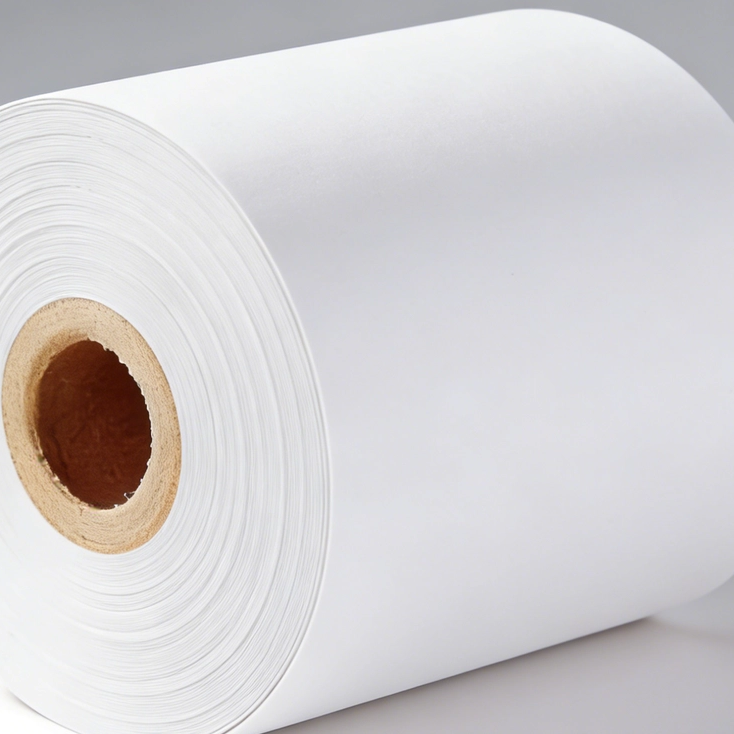
Reviewing data sheets carefully prevents costly engineering mistakes. You must align your material properties with real-world converting environments.
Thoroughly reviewing official mgk release paper specifications prevents over-engineering. You avoid paying for unnecessary performance upgrades. Conversely, it prevents under-specifying for a highly demanding project. Proper alignment keeps your operations running efficiently.
Different operational requirements demand different paper weights. We often recommend 30gsm mgk release paper as a lightweight, cost-effective standard. It works perfectly for specific tape or label backing applications. Thinner sheets yield more square meters per roll. This reduces changeover frequency on the machine. Heavier variants exist for aggressive adhesives requiring deeper die-cutting tolerances.
Basis Weight Category | Typical Application Scenarios | Key Operational Advantage |
|---|---|---|
Lightweight (e.g., 30gsm) | Standard labels, envelope closures | Higher yield per roll, fewer changeovers |
Medium Weight (60-80gsm) | Industrial tapes, medical adhesives | Balanced tensile strength and flexibility |
Heavy Weight (90gsm+) | Die-cut parts, heavy mastic tapes | Maximum structural rigidity during cutting |
Calendering is a mechanical process flattening the kraft base. Extensive calendering improves surface smoothness significantly. A highly smooth surface ensures excellent silicone hold-out. The silicone stays on top rather than soaking into the fibers. This directly improves subsequent release performance. You can choose single-sided or double-sided smoothness depending on your web path.
Kraft bases naturally absorb or release moisture. You must note acceptable humidity thresholds carefully. Maintaining a 4% to 6% moisture content range prevents severe curling. It stops structural degradation during warehouse storage. Dried-out sheets become brittle and snap easily under tension.
Even perfectly tested materials can fail during actual production. You must anticipate common implementation risks before they halt your machines.
Pairing an incompatible adhesive creates instant disaster. You face significant risks if you ignore the chemical release profile. Here are common mismatch scenarios:
Applying aggressive acrylics to easy-release silicone, causing premature dispensing.
Pairing hot-melt rubber glues with tight-release liners, causing paper tearing.
Using specialized silicone adhesives requiring fluorosilicone release coatings.
Warehouses rarely maintain perfect laboratory conditions. Temperature fluctuations temporarily or permanently alter release characteristics. High warehouse humidity swells the paper fibers overnight. Extreme cold stiffens the adhesive layer significantly. These factors change how the materials behave prior to processing. You must condition your rolls in the production area before running them.
Converting paper inherently generates airborne particulate matter. Edge cleanliness remains critical during the slitting process. Dust reduction prevents heavy adhesive contamination. If paper dust mixes into the sticky layer, bond strength drops immediately. You must ensure slitting knives remain sharp to minimize loose fibers.
Your material provider acts as a critical operational partner. You need strict criteria for evaluating their technical competence.
Require prospective partners to provide batch-specific testing reports. A generic data sheet offers very little true assurance. Demand Certificates of Analysis (COAs) for every delivered shipment. Ensure these reports map directly to established FINAT/ASTM standards. Transparency proves they actually test their daily production runs.
Assess their ability to engineer specific release profiles. Your unique project might require easy, medium, or highly tight release tension. Avoid partners pushing off-the-shelf stock blindly. A competent mgk release paper supplier formulates the silicone chemistry to match your exact needs.
Evaluate their raw material sourcing stability thoroughly. You cannot afford sudden supply shortages disrupting your schedules. Analyze their normal lead times. Verify their capacity to handle unexpected scaled production demands.
Request comprehensive test data and batch COAs.
Evaluate their custom release profile formulation abilities.
Assess material supply chain resilience and lead times.
Order sample size trial rolls for machine testing.
Always recommend requesting trial rolls first. You must run sample size testing on your actual converting equipment. Do this before committing to bulk procurement contracts. Machine speeds and local humidity will reveal the truth about material quality.
Rigorous, data-backed testing remains the only reliable method to safeguard product integrity. When utilizing technical release liners, assumptions lead to expensive failures. Standardized tests measure exact separation energies and curing completeness perfectly.
Encourage your team to adopt a highly skeptical, evidence-based approach to procurement. You should trust supplier claims only when verified by established laboratory testing. Reliable data prevents unexpected web breaks and consumer complaints.
Review your current material data sheets today. Request a technical consultation to audit your existing release liner performance. Identifying minor inconsistencies now prevents massive production headaches tomorrow.
A: You should conduct testing on every single production batch. Relying solely on continuous inline monitoring provides a false sense of security. Batch-testing verifies that the final cured silicone profile meets FINAT/ASTM tolerances before shipping. Thorough facilities sample the beginning, middle, and end of master rolls to guarantee complete uniformity across the entire web.
A: Incomplete thermal or UV curing processes cause silicone migration. Unbonded silicone molecules transfer into the adhesive layer, destroying its tackiness. We predict this failure using the residual adhesion rate test. Technicians measure how much grip a standard tape retains after contacting the liner. A low retained grip strictly indicates severe silicone transfer issues.
A: The thinner gauge thickness requires extremely precise blade depth calibration. If your anvil pressure runs too high, the blade will easily slice completely through the lightweight backing. However, when calibrated correctly, it provides excellent structural support. The thinner profile also significantly reduces machine changeovers by maximizing the linear meter yield per roll.
A: Yes, environmental fluctuations heavily invalidate testing outcomes. Paper fibers absorb ambient moisture rapidly, changing their tensile strength and thickness. Extreme temperatures also alter the silicone stiffness. Standard laboratory conditioning requires holding samples at 23°C and 50% relative humidity for 24 hours. This stabilization ensures your baseline data remains perfectly accurate and repeatable.


