


Views: 0 Author: Site Editor Publish Time: 2026-09-10 Origin: Site


Moving from a sample evaluation to a bulk order brings high operational risk in material procurement. Buyers rely heavily on preliminary sample evaluations to secure reliable industrial materials. Unfortunately, an initial product performing flawlessly in static lab tests can fail catastrophically during high-speed converting or lamination processes. Overlooking minor discrepancies early often translates into massive production delays and rejected batches later. These failures disrupt supply chains and damage client trust.
This guide provides a rigid, evidence-based framework for evaluating technical tolerances accurately. We explore how to verify commercial viability and lock in quality standards before signing any bulk purchase agreement. You will learn specific testing criteria to definitively judge supplier submissions. We outline practical machine trials and identify red flags. Following these steps helps you seamlessly transition into high-volume manufacturing without surprises. Protect your production line by treating the sample phase as a rigorous audit.
Establish a "Golden Sample": Never proceed to bulk production without a mutually signed, production-run sample that serves as the contractual baseline.
Test Beyond the Lab: Mechanical evaluation must include trial runs on actual manufacturing equipment to verify thermal stability and tension handling.
Verify Technical Alignment: Cross-reference physical performance with the supplier's Technical Data Sheet (TDS) to ensure specifications like release force and subsequent adhesion are mathematically consistent.
Mitigate Commercial Risk: Structure agreements so that sample development costs are credited toward the bulk invoice, while setting clear penalties for lot-to-lot variance.
Before requesting physical rolls or swatches, align on the specific category of sample. Avoid false expectations early in the procurement cycle. Discuss sample definitions clearly to prevent misunderstandings. When contacting your release film supplier, define exactly what you need. They must understand your end goals to provide relevant materials suited for your unique application.
Differentiate between hand-coated prototypes and off-the-line Pre-Production (PP) samples. Hand-coated R&D swatches work well for a basic proof of concept. Engineers often use them to test preliminary adhesive compatibility. However, they rarely reflect realistic machine capabilities. A laboratory draw-down tool applies silicone differently than an industrial gravure roller running at 200 meters per minute. Off-the-line Pre-Production samples come directly from standard manufacturing equipment. They show you exactly what to expect during a real manufacturing run. Always insist on PP samples for final validation before approving high-volume budgets.
Share your acceptable tolerances with the supplier upfront. Define metrics clearly, including maximum permissible silicone migration or specific curing conditions. Transparency ensures mutual understanding. If you need a release force of 15 grams per inch, state this requirement immediately. Ambiguity leads to rejected shipments. Provide details regarding your coating temperatures, web tension limits, and storage environments. Clear metrics protect both parties during the review process. They eliminate guesswork and allow the manufacturer to formulate the silicone coating precisely.
Establish the requirement to create a definitive benchmark. The final approved sample becomes the "Golden Sample". Both parties must sign, date, and seal it securely. Store this master sample in a climate-controlled environment to prevent degradation. Use this physical swatch as the absolute standard for inbound quality control on all future deliveries. It removes subjective arguments about quality fade over time. When a new batch arrives, your quality assurance team will compare it directly against the Golden Sample to verify consistency.
Do not rely solely on the provided Technical Data Sheet (TDS). Manufacturers sometimes publish theoretical maximums instead of batch-specific realities. Conduct independent or third-party laboratory verification. Verify all release film specifications internally. Your lab environment provides objective data regarding mechanical limits and actual performance traits.
Measure peeling resistance at varying speeds and angles. Standard evaluations include both 180° and 90° peel tests according to FINAT frameworks (such as FTM 3 and FTM 4). You must ensure consistency across the entire web width. A sample might peel perfectly in the center but stick firmly at the edges due to uneven silicone distribution. Identify these variations early to prevent web breaks during mass production. Test the peel force at different removal speeds. Some coatings exhibit a "zippy" release at low speeds but lock up entirely during high-speed stripping.
Evaluate the film for silicone transfer or lock-up. Silicone migration silently degrades the adhesive properties of your final product. When unreacted silicone molecules rub off onto your pressure-sensitive adhesive layer, they destroy the bonding strength. Perform subsequent adhesion testing to confirm the adhesive remains strong after removal from the liner. Coat the sample material, remove it, and apply the adhesive to a stainless-steel test panel. Measure the holding power. A significant drop in tackiness indicates poor silicone curing on the liner.
Test thickness uniformity and tensile strength under severe thermal stress. For instance, when evaluating a 19 m pet release film, verify the thin gauge thoroughly. Ensure it does not warp, shrink, or snap under standard equipment curing temperatures. Thinner films save weight and reduce shipping volumes. However, they demand tighter tension control. Measure the caliper across multiple points across the web to guarantee gauge consistency. Uneven thickness causes telescoping rolls and uneven adhesive application.
Laboratory Testing Metrics Summary
Testing Metric |
Standard Framework |
Primary Objective |
Red Flag Threshold |
|---|---|---|---|
Release Force Profiling |
FINAT FTM 3 / FTM 4 |
Measure peeling resistance at varied speeds. |
>5% variance from TDS or across web width. |
Subsequent Adhesion |
FINAT FTM 10 / FTM 11 |
Detect silicone migration into adhesive. |
>10% loss of initial adhesive tack. |
Dimensional Stability |
ASTM D1204 |
Test shrinkage under high temperatures. |
Visible curling or >1.5% shrinkage. |
Gauge Consistency |
ASTM D3652 |
Verify thickness uniformity. |
Thickness variance exceeding ±3%. |
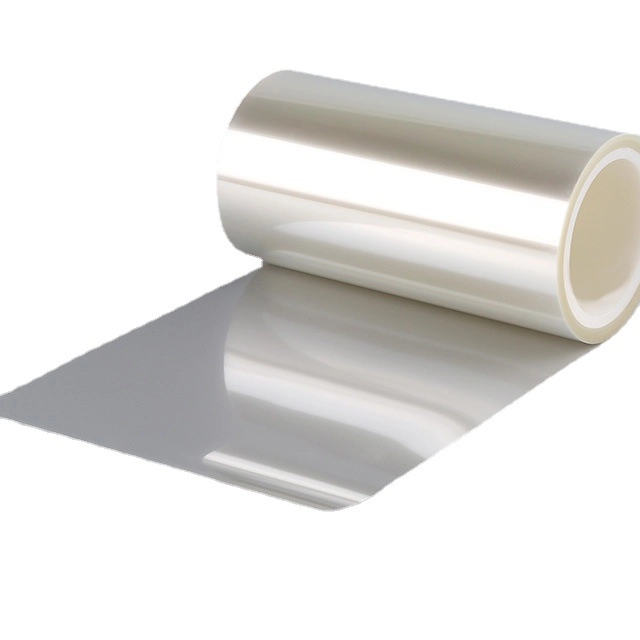
A lab-approved sample represents only a partial pass. Laboratory environments rarely duplicate the harsh realities of a factory floor. The next critical step in the decision stage is the machine trial. Evaluate the release film thoroughly under actual operating stresses. Real-world conditions reveal microscopic flaws undetectable on a static testing bench.
Run the sample roll through your die-cutting, slitting, or coating lines. High processing speeds amplify minor defects significantly. Identify issues involving web tension, edge curling, or static buildup. Static electricity attracts dust instantly, ruining the coating process. Ensure the liner unwinds smoothly without snapping or stretching. Monitor how the material interacts with your machine rollers. Excessive slip can cause tracking errors. Insufficient slip creates drag, leading to web breaks and costly downtime.
Expose the sample to extreme humidity and temperature variations. Industrial materials often sit in hot tropical warehouses or freezing shipping containers for weeks. Subject the roll to these precise conditions inside an environmental chamber before testing. You will discover if the silicone coating cross-links further or degrades over time. Some materials experience "silicone block" when exposed to high humidity, making unwinding impossible. Simulating transit and storage guarantees reliable end-user application regardless of geographic location.
Track the defect rate strictly during the trial run. Calculate the exact percentage of usable material versus waste. High scrap rates destroy profitability rapidly. Model the true operational cost of the material based on these figures. Sometimes, a liner featuring a slightly higher upfront unit price yields significantly less scrap during processing. This efficiency offsets the initial expense completely. Document every instance of a web break, misregistration, or uneven coating layer to build a realistic financial model for bulk usage.
Maintain a healthy skepticism when reviewing supplier submissions. Spotting discrepancies now prevents costly bulk rejections later. Treat the evaluation as an investigative process. Watch for subtle warning signs indicating poor manufacturing control or deceptive business practices.
Beware of samples showing zero standard deviation. Perfect uniformity often indicates manual selection rather than a true representation of average production runs. Real manufacturing involves minor natural variances. If the test results look impossibly flawless, ask for a random roll directly from the slitter. Suppliers sometimes hand-cut the best sections of a web to secure a contract. You need assurance regarding their everyday production quality, not their best-case scenario.
Suppliers must provide accurate, highly detailed paperwork. If they resist providing an updated, batch-specific TDS for the exact sample provided, it signals a lack of process control. Generic documentation cannot protect you during a dispute. Demand precise data matching the physical roll on your desk. Ensure they include a Certificate of Analysis (COA) confirming the specific batch properties. Missing documentation usually points to inconsistent testing protocols on the supplier's end.
Watch for unauthorized material changes between iterations. Vendors might alter the base material origin or switch coating methods from solvent to solventless without notification. Sudden shifts in lead times immediately following sample approval also raise severe alarms. These indicators suggest the vendor cannot scale the approved prototype reliably.
Unexplained Visual Shifts: Noticeable changes in haze, clarity, or color tint indicate raw material substitution.
Core Size Variations: Receiving samples on different core sizes or exhibiting poor winding tensions compared to standard expectations.
Reluctance to Share Formulations: An unwillingness to confirm whether the silicone is platinum-cured or tin-cured.
Sudden Price Hikes: Introducing mandatory "premium processing fees" right after you approve the final sample.
Transitioning from technical validation to commercial execution requires a structured purchasing logic. You need a systematic approach to rank vendors and secure favorable terms. Do not base the final decision on unit price alone. Follow a structured sequence to minimize risk and establish binding expectations.
Score suppliers objectively. Balance technical pass rates against commercial terms. Use a structured matrix to remove emotional bias from the purchasing decision. A formalized scoring system justifies your final vendor selection to internal stakeholders.
Technical Performance (40% Weight): Weight critical specifications heaviest. Release force consistency, dimensional stability, and subsequent adhesion matter most.
Machine Trial Pass Rate (30% Weight): Evaluate the yield percentage, processing speeds achieved, and static control observed during the physical trial.
Commercial Terms (20% Weight): Compare unit pricing, Minimum Order Quantities (MOQ), and standard lead times.
Supplier Responsiveness (10% Weight): Score their communication speed, technical support capability, and willingness to adjust formulations during the sampling iterations.
Tie the bulk Purchase Order (PO) directly to the parameters of the approved sample. Define exact acceptable margins of error explicitly. For example, specify a maximum ±5% variation in release force across any given roll. Explicit clauses remove ambiguity. They legally bind the vendor to replicate the golden standard continuously. Include specific language detailing who bears the freight costs for returning rejected batches. Strong contractual wording acts as a deterrent against sloppy manufacturing practices.
Negotiate the absorption of sample tooling costs. Push to credit premium shipping costs or pilot-run fees as a deduction on the initial bulk invoice. This strategy mitigates financial risk for your procurement department. It also forces the vendor to invest in a successful long-term partnership. Agree on payment terms linking final bulk payment to the successful quality control pass of the inbound delivery. Securing these financial structures upfront ensures the supplier remains highly motivated to deliver perfect materials.
Treating the sample phase as a rigorous, multi-stage audit is the most effective way to protect your production line. Moving past simple visual checks ensures genuine reliability. By demanding Pre-Production rolls, running comprehensive machine trials, and locking in technical specifications contractually, you eliminate costly surprises. You transition from hoping for the best to guaranteeing operational success.
Take these clear steps next to secure your procurement process:
Draft a strict evaluation matrix outlining acceptable technical and commercial tolerances before ordering any physical samples.
Implement a mandatory "Golden Sample" sign-off protocol for all inbound materials to establish an indisputable baseline.
Update your purchasing agreements to include specific financial penalties for lot-to-lot variance and defective shipments.
Involve your machine operators in the trial phase to capture practical feedback regarding material handling and static generation.
By testing both the physical material and the operational transparency of your vendor, you establish a reliable foundation for a scalable, long-term procurement relationship.
A: Standard A4 swatches or short sample rolls are typically free, though buyers often cover freight. For custom-engineered coatings or full-width trial rolls (Pre-Production samples), suppliers usually charge a fee. It is standard industry practice to negotiate these fees as a credit against your first bulk order.
A: If you established a signed "Golden Sample" and tied your PO to its specific tolerances, the supplier is contractually obligated to replace the defective batch or issue a refund. Without this baseline, proving a discrepancy relies solely on subjective claims.
A: Off-the-shelf specification samples can arrive in days, with bulk following in 2-3 weeks. Custom silicone formulations or specific thickness requirements require a longer iterative sampling phase, often pushing the timeline to 6-8 weeks before bulk manufacturing begins.


