


Views: 0 Author: Site Editor Publish Time: 2026-07-30 Origin: Site


Can a thin liner cause an entire label line to fail? Yes, when release, strength, or flatness does not match the process. Choosing release paper for labels requires more than comparing paper names. In this guide, you will learn how to evaluate materials, test performance, and approve a reliable liner.
● Set measurable targets for release force, tensile strength, thickness, flatness, and moisture response before comparing materials or prices.
● Glassine supports lightweight, smooth, and compact constructions. CCK provides greater rigidity, while SCK favors density, flatness, and precise converting.
● PCK adds a stronger moisture barrier and dimensional stability. MGK offers a smooth machine-glazed surface, controlled release, and useful printability.
● Test candidates through printing, die-cutting, matrix stripping, slitting, rewinding, and dispensing at normal production speed.
● Approve both fresh and aged samples. Define incoming inspection limits, retain reference rolls, and track performance between production batches.
● Compare total converting cost instead of purchase price alone. A cheaper liner may create waste, web breaks, slower speeds, or rejected labels.
Choose release paper for labels as part of the complete laminate. Facestock, adhesive chemistry, coat weight, die-cut design, and dispensing method all affect performance.
A release liner cannot be selected correctly without understanding the complete label construction. Begin by documenting the facestock, adhesive, converting process, application method, and storage conditions.
Paper, film, foil, and specialty facestocks create different demands. Thin films may need a flatter and more stable liner, while heavier papers may require greater liner stiffness.
You should also record adhesive chemistry, coat weight, initial tack, and aging behavior. An aggressive adhesive may need a different release level than a removable adhesive.
List every stage the liner must support. Common steps include laminating, printing, die-cutting, matrix stripping, slitting, rewinding, and automatic dispensing.
Machine speed also matters. A liner that performs well during hand peeling may behave differently during high-speed label application.
Consider humidity, temperature changes, grease, transportation, and storage time. These conditions can change paper flatness, adhesive behavior, and release force.
Labels used in cold, humid, or industrial settings usually need better dimensional stability. They may also require stronger moisture protection.
Tip:Approve the adhesive, facestock, and release liner as one tested construction.
The most reliable selection method uses measurable performance requirements. Six factors have the greatest effect on converting stability and label application.
Release force controls how easily the label separates from its liner. It must be low enough for smooth dispensing but high enough to prevent early lifting.
Very light release can cause labels to separate during rewinding or transport. Heavy release may cause missed applications, adhesive disturbance, or difficult hand peeling.
Ask the supplier how release force is measured. Peel speed, peel angle, conditioning time, and test adhesive can change the reported result.
Lighter papers reduce roll weight and allow more labels per roll. However, they may offer less stiffness and lower resistance to demanding web tension.
Heavier liners provide better support for large labels and complex die-cut shapes. They can also improve roll handling and automatic dispensing.
Do not select weight by price alone. The correct weight should support the label without creating unnecessary material use.
The liner must survive tension during printing, die-cutting, stripping, slitting, and rewinding. Weak paper may tear around narrow matrix areas or complex label corners.
Tensile strength becomes more important at higher speeds. It also matters when rolls are narrow, long, or processed under strong web tension.
Curling can disrupt registration, die-cut accuracy, matrix removal, and label dispensing. It may also produce uneven rolls or feeding problems.
Look for stable paper that resists shrinking, warping, and moisture-related movement. Dense or reinforced constructions often provide stronger dimensional control.
A smooth surface supports uniform silicone coating and consistent adhesive contact. It can improve release stability across the full web width.
Surface quality also affects backside printing and optical inspection. Rough or uneven paper may cause coating variation or inconsistent separation.
Many applications only need silicone coating on the adhesive-contact side. Other roll constructions may benefit from release treatment on both sides.
Color can help operators identify products or production batches. Semi-transparent liners may assist adhesive inspection, while opaque liners improve visual contrast.
Note:A laboratory release value may change during high-speed dispensing or storage.
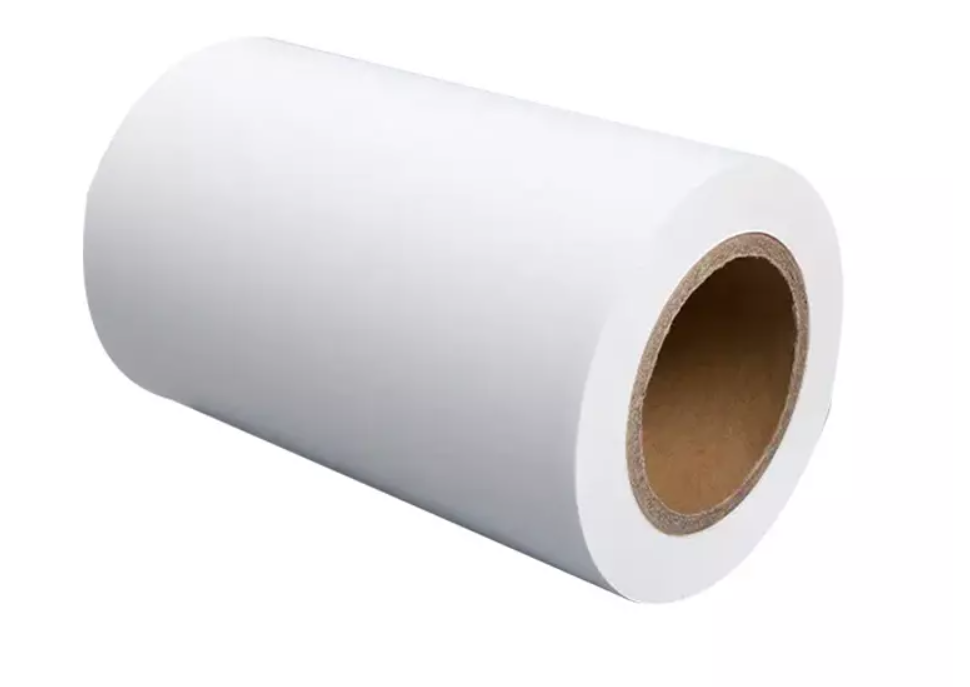
Several paper constructions can serve as release paper for labels. Each offers a different balance of weight, stiffness, smoothness, stability, and environmental resistance.
Glassine has a dense, smooth, glossy, and semi-transparent structure. Its thin profile helps create compact rolls without sacrificing useful strength.
It provides good moisture and grease resistance. Semi-transparency can also help operators inspect the adhesive layer before removing the liner.
Glassine often suits retail labels, logistics labels, barcode materials, and other high-volume pressure-sensitive constructions.
Clay-coated kraft, or CCK, has a smooth and opaque surface. Its stronger structure provides useful rigidity for demanding converting operations.
CCK offers good dimensional stability and resistance to environmental changes. It can support clean die-cutting, slitting, and controlled separation from pressure-sensitive adhesives.
It is often considered for larger labels, graphic products, and constructions needing more support.
Super-calendered kraft, or SCK, has a dense and highly smoothed surface. It combines good flatness, stable release, and consistent web behavior.
These properties support precision die-cutting, lamination, and high-speed labeling. SCK is also used for logistics, barcode, industrial, and durable identification labels.
It is a practical choice when converting accuracy matters more than liner transparency.
PCK uses a polyethylene-coated kraft base. The polymer layer improves moisture and grease resistance while supporting strength, flatness, and dimensional stability.
It can perform well in humid storage or demanding converting environments. Its reinforced structure also supports slitting, laminating, and high-speed production.
MGK uses a machine-glazed surface. It offers good smoothness, controlled release, and useful printability for selected pressure-sensitive constructions.
Paper type | Main advantage | Suitable selection priority | Important check |
Glassine | Lightweight and smooth | Compact rolls and general labels | Strength at production speed |
CCK | Rigid and stable | Larger or demanding labels | Required stiffness |
SCK | Dense and precise | High-speed converting | Release consistency |
PCK | Strong moisture barrier | Humid or demanding conditions | Added weight and cost |
MGK | Smooth and printable | Specialty constructions | Adhesive compatibility |
Paper type alone does not determine performance. Release force, basis weight, stiffness, and coating configuration must work together.
Aggressive adhesives usually require careful release testing. The liner must separate cleanly without damaging adhesive coverage or causing label distortion.
Test release immediately after lamination and after aging. Heat, pressure, humidity, and storage time may change the final peel behavior.
Small paper labels may perform well on a lightweight liner. Large film labels or complex shapes may need greater stiffness and tear resistance.
Consider roll diameter, matrix width, die-cut pattern, and dispensing equipment. Two liners with similar release force can behave differently because their structures differ.
One-side coating is suitable when only one surface contacts adhesive. It is often the simpler and more economical construction.
Double-side coating may help when the roll design creates blocking risks. It can also support specialized laminating or handling processes.
Technical data can help create a shortlist. Final approval should still depend on trials using the actual facestock, adhesive, tooling, and equipment.
Check whether the die cuts the facestock cleanly without damaging the liner. Excessive die penetration can weaken the web and cause breaks.
Observe matrix removal around corners, narrow gaps, and small labels. Record waste breaks, die pressure, and production speed.
Inspect edge quality, paper dust, web tracking, roll hardness, and telescoping. The liner should remain stable under normal machine tension.
Run enough material to expose gradual problems. A short trial may not reveal heat buildup, curl, or winding variation.
Some liners carry registration marks, product codes, instructions, or branding. Test ink adhesion, drying, contrast, and resistance to rubbing.
Smooth surfaces often support clearer printing. However, ink performance still depends on the coating and printing process.
Use the intended peel angle and production speed. Watch for early release, missed labels, liner tearing, and inconsistent separation.
Repeat the test after environmental conditioning. A successful fresh sample may perform differently after storage.
Tip:Measure waste, downtime, and missed applications during every production trial.
Release paper can absorb or block moisture, depending on its construction. Environmental exposure should be part of the approval process.
Humidity may soften paper, change curl, or reduce stiffness. Moisture-barrier constructions can provide better stability in challenging storage conditions.
Glassine offers useful moisture resistance for many lightweight applications. PCK provides a stronger barrier when humidity is a major concern.
Heat and cold can affect both the adhesive and liner. Test the complete laminate at realistic storage and application temperatures.
Check for curl, deformation, changing release force, and adhesive transfer. Temperature cycling may reveal issues missed during standard testing.
Measure release performance at several aging stages. Use the intended packaging, roll tension, and storage environment.
Set acceptable release limits throughout the expected shelf life. Do not approve a material using fresh results alone.
A suitable paper grade can still create problems when production consistency is weak. Supplier qualification should cover technical support, quality control, customization, and supply reliability.
Ask for basis weight tolerance, thickness, tensile strength, moisture content, release range, coating side, and storage guidance.
Confirm the supplier’s test methods. Results are easier to compare when peel angle, speed, adhesive, and conditioning rules are clear.
Samples should use your intended adhesive and facestock. They should pass through the complete converting and dispensing process.
Include fresh, aged, and environmentally conditioned samples. Document all settings so successful trials can be repeated.
Define limits for roll width, appearance, curl, coating uniformity, surface defects, and release performance.
Retain approved reference material. Compare new deliveries against it when operators report unexpected changes.
Confirm available weights, colors, release levels, roll widths, and coating configurations. Also review lead times, minimum quantities, and change-control procedures.
A dependable supplier should explain material differences clearly. It should also support troubleshooting when adhesive or equipment conditions change.
Tip:Track each incoming batch against waste rates and machine downtime.
Choosing the right liner means balancing release force, strength, flatness, moisture resistance, and machine performance. Hengmu offers Glassine, CCK, SCK, PCK, and MGK options for varied label processes. Its coating expertise, flexible specifications, and roll-level quality controls help converters reduce waste. Always validate samples using your adhesive, equipment, speed, and storage conditions before production approval.
A: Release paper for labels protects adhesive before converting and application.
A: Match release paper for labels to adhesive, strength, weight, and speed.
A: Release paper for labels may curl from moisture, heat, or weak stability.
A: Glassine is lighter, while CCK provides greater stiffness.
A: Paper type, coating, weight, width, volume, and testing affect price.
A: Recheck release force, liner stiffness, tension, speed, and aging.


