


Views: 0 Author: Site Editor Publish Time: 2026-08-28 Origin: Site


In modern manufacturing, efficiency, product quality, and process reliability are closely tied to the materials chosen for production. One often-overlooked component is the release liner. In particular, PET (Polyethylene Terephthalate) release film has emerged as a versatile material that can significantly improve production workflows across industries such as adhesives, labels, tapes, laminates, and electronics.
At Zhejiang Hengmu Composites Materials Co., Ltd., we provide high-quality PET release films engineered to deliver consistent release performance, mechanical strength, dimensional stability, and surface smoothness. Manufacturers who integrate PET release films effectively can achieve higher throughput, reduced waste, and improved product consistency. This article explores how PET release film can optimize production processes, highlighting its properties, applications, and strategies for maximizing efficiency.
PET release film is a polyester-based film coated with a silicone or other release agent to prevent adhesives from permanently sticking to the surface. Unlike traditional paper liners, PET films offer high tensile strength, thermal stability, chemical resistance, and transparency. These characteristics make PET films particularly valuable in high-speed and precision manufacturing processes.
The film can be produced in a variety of thicknesses and surface finishes, allowing manufacturers to tailor the release liner to specific adhesive types, tapes, labels, or laminated products. PET’s inherent clarity also facilitates visual inspection of adhesive layers, alignment guides, or product markings.
Several properties of PET release film contribute directly to process optimization:
PET films provide excellent tensile strength and tear resistance, which supports high-speed slitting, rewinding, and die-cutting without tearing or stretching. Robust mechanical performance minimizes machine downtime, reduces waste, and maintains consistent adhesive release.
PET release films resist curling, stretching, or shrinking, even under variable temperature and humidity conditions. Dimensional stability ensures accurate registration for labels, double-sided tapes, and laminated products, improving process reliability and reducing errors.
The silicone-coated surface of PET films offers a predictable release force, reducing issues such as adhesive residue, sticking, or misalignment. Consistent release behavior enables high-speed production lines to operate efficiently with fewer stoppages.
PET films withstand moderate heat and resist many chemicals, adhesives, and solvents used during manufacturing. This allows the films to perform reliably in processes involving lamination, bonding, or heat-assisted adhesive curing without degradation.
Clear PET films allow operators to inspect adhesives, alignment guides, and markings directly through the liner, facilitating quality control and reducing errors during assembly.
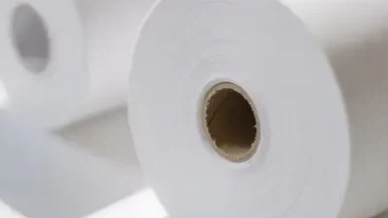
PET release film is employed in a wide array of production processes:
PET release films serve as liners for PSA labels, tapes, and sheets. Their smooth, consistent surface prevents premature adhesive sticking, ensuring clean release and reliable handling.
For double-sided adhesives, PET liners protect both adhesive faces during storage and handling. The films’ mechanical strength allows high-speed die-cutting and lamination without tearing or adhesive deformation.
In electronics manufacturing, PET release films protect delicate surfaces during assembly, soldering, or transportation. Their chemical and thermal resistance ensures that the films perform reliably in demanding production conditions.
PET liners are used in surgical tapes, wound dressings, and tabbed hygiene products. The films provide hygienic, predictable release during automated assembly processes.
PET release films act as liners for laminated or protective packaging materials, ensuring product integrity while enabling high-speed converting and clean adhesive release.
Integrating PET release film effectively requires attention to both material selection and process alignment. Below are strategies manufacturers use to optimize production:
Selecting the right film thickness is critical. Thicker films offer greater mechanical strength and stability, making them ideal for heavy-duty adhesive applications or high-speed converting. Thinner films provide flexibility for lightweight labels and tapes. Correctly matching thickness minimizes machine stoppages, misfeeds, and roll damage.
The silicone coating determines release performance. Single-sided coatings are typical for labels and tapes, while double-sided coatings may be necessary for specialized products. The coating should be compatible with the adhesive to ensure predictable peel force and reduce residue.
PET films must be stored in controlled environments to prevent contamination, moisture absorption, or surface damage. Consistent storage practices preserve release performance and prevent issues during high-speed production.
Aspect | Key Details & Benefits |
Adhesive Compatibility with PET Liner | Ensure the adhesive type is compatible with PET liner for optimal performance. |
Testing Requirements | Manufacturers should test release force, peel behavior, and adhesion under actual process conditions. |
Alignment and Process Control | Proper alignment reduces defects, improves consistency, and minimizes rework. |
PET film transparency enables inline inspection of adhesive placement, alignment, and roll quality. Monitoring film performance during production reduces waste, ensures regulatory compliance, and maintains product quality.
A pressure-sensitive label manufacturer experienced frequent downtime with paper-based liners due to tearing and adhesive sticking. Transitioning to PET release film provided smooth, predictable release, reduced machine stoppages, and improved throughput by 20%.
A manufacturer of double-sided tapes needed liners that could withstand high-speed die-cutting. PET release films with enhanced tensile strength and consistent silicone coating prevented tearing and adhesive deformation, increasing production efficiency and reducing waste.
An electronics assembly plant used PET release films as liners for protective masking layers. Their chemical resistance, thermal stability, and mechanical strength allowed reliable performance in soldering and assembly processes, reducing defects and improving product quality.
In a medical tape production line, PET release films ensured hygienic handling and predictable release. The films improved automated assembly efficiency while reducing the risk of adhesive contamination, contributing to higher product quality and compliance with health standards.
Using PET release films provides additional operational and financial benefits:
Reduced Waste: Predictable release and mechanical durability minimize scrap material.
Improved Machine Efficiency: Stable liners allow higher line speeds with fewer stoppages.
Enhanced Product Quality: Clean, residue-free release preserves adhesive integrity and product appearance.
Better Printability: Smooth surfaces support in-line or post-production printing for alignment, branding, or regulatory compliance.
Sustainability: PET films can be recycled in appropriate streams, supporting environmentally responsible manufacturing.
A trusted supplier ensures that PET release films meet industrial specifications and provide consistent performance. Zhejiang Hengmu Composites Materials Co., Ltd. offers a range of PET release films tailored to industrial applications, with varied thicknesses, silicone coatings, and surface finishes.
Partnering with an experienced supplier provides manufacturers with:
Consistent material quality
Technical support for process integration
Timely and reliable delivery
Solutions aligned with production efficiency and product quality goals
Hengmu’s PET films help manufacturers optimize production processes, reduce waste, and maintain high-quality output across various industries.
PET release film is a versatile, durable, and high-performance solution that optimizes production processes across adhesives, labels, tapes, laminates, and protective applications. Its combination of mechanical strength, dimensional stability, thermal and chemical resistance, smooth surface, and transparency makes it superior to traditional paper-based liners in high-speed and precision manufacturing.
For manufacturers seeking to enhance production efficiency, reduce waste, and improve product quality, Zhejiang Hengmu Composites Materials Co., Ltd. offers a range of high-quality PET release films and technical expertise. Partnering with a trusted supplier ensures that production lines run smoothly, and end products meet the highest standards.
Q: What is PET release film used for?
A: PET release film serves as a liner for adhesives, labels, tapes, laminates, protective films, and medical products, providing predictable release and mechanical support.
Q: How does PET release film improve production efficiency?
A: Its strength, dimensional stability, and smooth silicone-coated surface reduce machine stoppages, tearing, and adhesive residue, enabling high-speed, consistent production.
Q: Can PET release films withstand heat and chemicals?
A: Yes, PET films are resistant to moderate heat and many chemicals, making them suitable for lamination, adhesive curing, and electronic assembly processes.
Q: Why choose PET over paper-based release liners?
A: PET offers superior mechanical strength, stability, thermal and chemical resistance, and transparency, enhancing production reliability and product quality.


