


Views: 0 Author: Site Editor Publish Time: 2026-01-28 Origin: Site


Is the strongest adhesive always the right choice for labels?
In reality, the answer depends on label materials and how they behave.
This article explores why no single adhesive works for every label.
You will learn how material compatibility shapes adhesive performance and decisions.
Adhesive performance is inseparable from label materials. The same adhesive can behave very differently depending on the surface it contacts. Factors such as porosity, surface energy, flexibility, and coatings directly influence how well an adhesive wets, bonds, and holds over time. Understanding these material-driven differences is essential when evaluating what makes an adhesive suitable in real label applications.
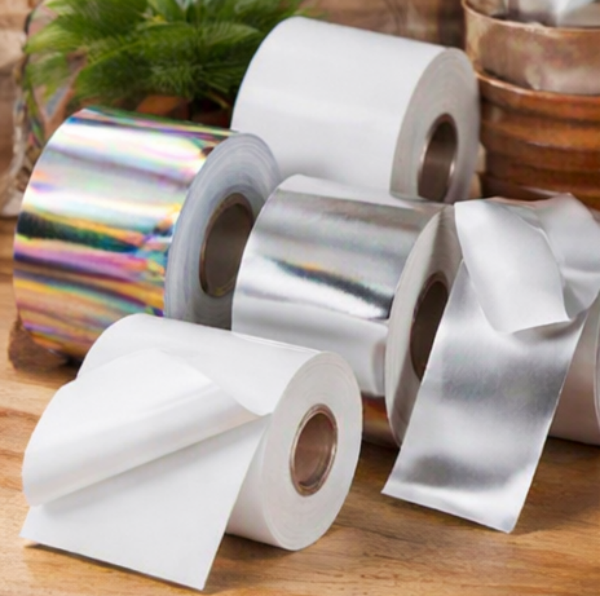
Paper label materials and film label materials present fundamentally different bonding conditions. Paper is porous by nature. It allows adhesives to partially absorb into the surface, which often improves mechanical anchoring. This absorption can stabilize adhesion, but it also makes paper sensitive to moisture and humidity changes. Coated papers further complicate this behavior by reducing absorbency and altering surface energy.
Film label materials, such as polypropylene or polyester, are non-porous and chemically uniform. Adhesives cannot absorb into these surfaces and must rely entirely on surface wetting. This makes adhesive formulation more critical, as poor wet-out can lead to edge lifting or low bond strength. Film materials also tend to be more flexible, which introduces stress at the adhesive interface during handling or temperature changes.
Material type | Surface behavior | Adhesion implication |
Uncoated paper | Porous, absorbent | Strong mechanical anchoring, moisture-sensitive |
Coated paper | Semi-sealed surface | Reduced absorption, adhesion varies by coating |
Film materials | Non-porous, smooth | Adhesion depends on wet-out and surface energy |
Adhesives interact with label materials at a molecular level. Surface energy plays a central role in this interaction. High-energy surfaces allow adhesives to spread evenly, creating consistent contact. Low-energy surfaces resist wetting, which limits contact area and reduces bond strength. As a result, an adhesive that performs well on paper label materials may struggle on certain film label materials.
Material flexibility also affects adhesive behavior. Rigid label materials transmit stress directly to the adhesive layer. Flexible materials bend and recover, which can fatigue the adhesive over time. Temperature changes amplify this effect. When label materials expand or contract at different rates than the adhesive, internal stress builds, weakening adhesion even if the adhesive itself remains intact.
When adhesive selection does not account for label materials, failures tend to follow predictable patterns. These failures are not always immediate. Many appear after storage, transport, or environmental exposure. Common issues include edge lifting, adhesive ooze, and complete label detachment. Each failure mode reflects a mismatch between material properties and adhesive behavior.
● Typical material–adhesive mismatch problems include:Edge lifting on film label materials due to insufficient surface wetting
● Tunneling on flexible labels caused by uneven stress distribution
● Adhesive bleed-through on paper label materials with high absorbency
● Loss of adhesion after temperature cycling or humidity exposure
The way an adhesive bonds is strongly influenced by the surface properties of label materials. Even when the same adhesive is used, differences in surface energy, texture, and surface treatment can lead to very different adhesion outcomes. Understanding these factors helps explain why adhesion success often depends more on the material surface than on adhesive strength alone.
Surface energy determines how easily an adhesive can spread across label materials. When surface energy is high, the adhesive flows and wets the surface evenly. This creates continuous contact, which supports stable bonding. Many paper label materials fall into this category, especially uncoated grades.
Low surface energy materials resist wet-out. The adhesive tends to bead or pull back instead of spreading. This reduces the effective contact area and weakens the bond. Many film label materials behave this way, especially untreated plastics. In these cases, adhesion problems often appear even when pressure is applied correctly.
● Key effects of surface energy on adhesion include:High surface energy allows consistent adhesive wet-out
● Low surface energy limits contact and reduces bond strength
● Incomplete wet-out increases the risk of edge lifting over time
Surface texture changes how adhesive load is distributed across label materials. Smooth surfaces allow uniform contact between the adhesive and the material. This supports predictable adhesion and reduces localized stress points. Glassine-backed papers and smooth films often show this behavior.
Textured or rough surfaces interrupt adhesive contact. The adhesive bridges over surface peaks and fails to reach deeper valleys. This creates uneven bonding zones and weak points. On some paper label materials, texture can help anchoring. On others, it leads to inconsistent adhesion. The outcome depends on how well the adhesive can conform to the surface profile.
A simplified comparison highlights this difference:
Surface type | Contact pattern | Adhesion stability |
Smooth | Continuous contact | More stable over time |
Light texture | Partial contact | Variable, material-dependent |
Heavy texture | Disrupted contact | Higher failure risk |
Coatings and surface treatments modify how label materials interact with adhesives. Coated papers often reduce absorbency and alter surface energy. This can improve print quality, but it may reduce mechanical anchoring. As a result, adhesion becomes more dependent on surface wetting rather than absorption.
Surface treatments on film label materials are used to raise surface energy. These treatments improve adhesive wet-out and bonding consistency. However, treatment effectiveness can decline over time or after handling. This introduces variability in adhesion results during storage or conversion.
● When coatings or treatments are present, adhesion behavior often changes in the following ways:Reduced absorption shifts bonding toward surface interaction
● Treated surfaces improve initial wet-out but may age
● Inconsistent treatment leads to uneven adhesion performance
Choosing an adhesive depends on how label materials interact with the bonding layer. Paper, film, and rigid surfaces each create different adhesion conditions. An adhesive that performs well on one material may behave unpredictably on another. Understanding these differences helps explain why adhesive selection is always material-specific.
Paper-based label materials allow adhesives to interact through both surface contact and absorption. Uncoated papers absorb part of the adhesive, which can improve mechanical anchoring. This often results in stable bonding, especially under dry conditions. However, excessive absorption may reduce effective tack and lead to adhesive bleed-through.
Coated paper label materials behave differently. Coatings limit absorption and change surface energy. Adhesion then depends more on surface wet-out than on anchoring. As a result, adhesive performance varies with coating type and thickness. Moisture exposure can further affect bonding by altering paper structure and adhesive flow.
● Common considerations for paper label materials include:Absorption level and its effect on anchoring
● Sensitivity to humidity and moisture
● Risk of adhesive migration through thin papers
Film-based label materials are non-porous and chemically uniform. Adhesives cannot penetrate the surface and must rely entirely on wet-out and surface interaction. This makes surface energy a critical factor. Low-energy films often show poor initial adhesion if wet-out is incomplete.
Flexibility also influences adhesion on film label materials. Films expand and contract with temperature changes. This movement places stress on the adhesive layer. Over time, stress can lead to edge lifting or gradual bond failure. Adhesive formulations must balance flexibility with bond strength to maintain stability.
● Typical challenges with film label materials include:Limited wet-out on untreated surfaces
● Stress from thermal expansion and contraction
● Reduced adhesion on curved or flexible substrates
Rigid substrates such as glass and metal present smooth, non-porous surfaces. Adhesives usually achieve good wet-out on these materials, which supports strong initial bonding. However, smooth surfaces offer little mechanical anchoring. Adhesion relies almost entirely on interfacial forces.
Environmental factors play a larger role on rigid substrates. Temperature shifts can create shear stress between the label materials and the surface. Chemical exposure may also weaken the adhesive interface. Cleanliness is critical, as contaminants easily disrupt bonding on smooth surfaces.
The table below summarizes common adhesion characteristics:
Substrate type | Surface nature | Adhesion considerations |
Glass | Smooth, high energy | Strong wet-out, low anchoring |
Metal | Smooth, variable energy | Sensitive to oils and residues |
Coated rigid surfaces | Treated, sealed | Adhesion depends on coating chemistry |
Adhesive behavior changes once labels leave controlled environments. Temperature shifts, moisture, and time all influence how adhesives interact with label materials. Performance that looks stable during application may change during storage, transport, or use. Evaluating real conditions is essential when assessing long-term reliability.
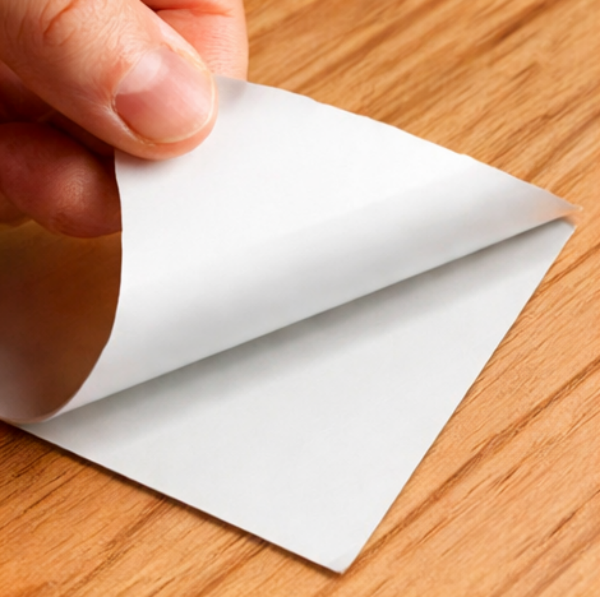
Environmental conditions directly affect adhesive flow and bond strength on label materials. High temperatures soften many adhesives. This can improve initial wet-out but reduce shear resistance over time. Low temperatures limit adhesive mobility. Reduced flow often leads to poor bonding during application, especially on film label materials.
● Humidity introduces another layer of complexity. Paper label materials absorb moisture, which can alter surface structure and weaken adhesion. Film materials do not absorb water, but moisture can still interfere at the adhesive interface. Common environmental stress factors include:Heat causing adhesive softening and edge movement
● Cold limiting adhesive flow and wet-out
● Humidity changing paper dimensions and bond stability
Short-term adhesion reflects how quickly an adhesive bonds after application. It is often driven by tack and surface wet-out. Many label materials show acceptable short-term adhesion even with marginal compatibility. Problems typically appear later, after the adhesive has fully set.
Long-term adhesion depends on resistance to stress, aging, and environmental exposure. Some adhesives lose flexibility over time. Others creep under constant load. Label materials influence how these changes manifest. Rigid materials transfer stress directly to the adhesive. Flexible materials create repeated strain during handling.
Differences between short- and long-term behavior can be summarized as follows:
Adhesion phase | Primary drivers | Typical risks |
Short-term | Tack, wet-out | Incomplete bonding |
Long-term | Shear strength, stability | Edge lifting, creep |
Aging begins as soon as labels are produced. Adhesives continue to change during storage, even before application. Exposure to heat, pressure, or light can alter adhesive properties. Thick adhesive layers may flow under load, especially when labels are stacked.
Label materials also age. Paper can dry out or absorb moisture. Films may lose surface treatment effectiveness over time. These changes affect how the adhesive performs at application. Storage conditions often influence final adhesion as much as material selection.
● Key storage-related factors include:Prolonged pressure causing adhesive deformation
● Heat accelerating adhesive aging
● Material changes affecting surface interaction
Selecting an adhesive requires aligning chemistry with how label materials behave during application and use. Paper and film respond differently to pressure, moisture, and temperature. These differences shape how adhesives bond, age, and release. A structured selection process helps reduce performance risk across varied labeling conditions.
Adhesive chemistry determines how bonding develops on different label materials. Some formulations rely on surface wetting, while others depend on mechanical anchoring. Paper label materials often support both mechanisms. Film label materials rely almost entirely on surface interaction, which makes chemistry selection more sensitive.
1. A practical decision logic starts with material behavior rather than adhesive strength. Surface energy, flexibility, and exposure conditions define the bonding window. The following steps reflect a common evaluation approach:Identify whether the label material is porous or non-porous
2. Assess surface energy and expected wet-out behavior
3. Consider temperature and humidity during application
4. Match adhesive chemistry to these constraints
Adhesive performance is not defined by a single property. Initial tack controls how quickly a label bonds at application. Adhesion strength determines how well it stays in place. Removability defines how cleanly it can be removed later. These factors often work against each other.
● Paper label materials typically tolerate higher tack without damage. Film label materials are less forgiving and may show residue or distortion if adhesion is too aggressive. The balance depends on use requirements and material limits. Key trade-offs include:Higher tack improving placement speed but increasing removal risk
● Strong adhesion improving durability but reducing clean release
● Lower adhesion aiding removability but increasing failure potential
Durability requirements often conflict with processing and end-use needs. Labels designed for long-term exposure require stable adhesion under stress. This stability may complicate die-cutting, dispensing, or repositioning during application. Label materials influence how these conflicts appear.
Paper label materials may deform during processing when adhesives remain flexible. Film label materials may shrink or stretch, increasing stress on the bond. End-use conditions further shape acceptable compromises. The table below outlines typical trade-offs:
Priority focus | Impact on adhesive choice | Common risk |
High durability | Strong, stable bonding | Reduced removability |
Easy processing | Lower tack, controlled flow | Limited holding power |
Clean removal | Balanced adhesion | Shorter service life |
There is no single best adhesive for every label.
Adhesive performance depends on label materials and real use conditions.Aligning adhesive choice with material behavior improves reliability.
Surface properties, environment, and lifespan all influence results.Zhejiang Hengmu Composites Materials Co., Ltd. supports this process.
Its label materials provide consistent performance across applications.
A: Adhesive performance varies because label materials differ in surface energy, porosity, and environmental resistance.
A: Temperature, humidity, and surface cleanliness determine how label materials interact with adhesive systems.
A: Longer lifecycle label materials may increase upfront cost but reduce replacement, failure, and maintenance risks.


