


Views: 0 Author: Site Editor Publish Time: 2026-02-02 Origin: Site


Have you ever wondered why some labels last longer than others?
Choosing the right label materials affects durability and appearance.
In this article, you will learn the main types and uses of labels.
Label materials refer to the surface substrates used to carry printed or variable information in labeling systems.They form the visible layer of a label and directly affect appearance, durability, and handling behavior.In modern labeling systems, label materials are designed to work with specific printing and application methods.They may be made from paper, film, or synthetic compounds depending on functional needs.
From a technical perspective, label materials are defined by measurable properties rather than marketing terms.These properties include surface texture, thickness, stiffness, and resistance to moisture or chemicals.In production workflows, label materials are selected based on how they perform during printing, cutting, and application.This definition helps separate the label face material from other components in the labeling structure.
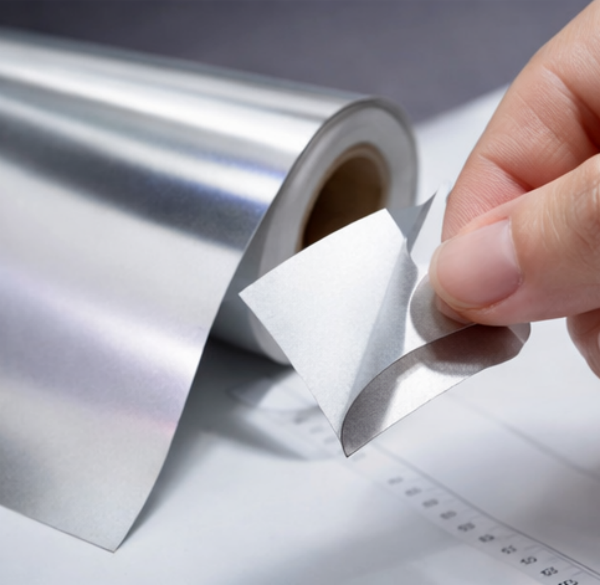
Common characteristics used to define label materials include:
● Surface finish and ink receptivity
● Mechanical strength during dispensing
● Environmental resistance during storage and use
● Compatibility with printing and finishing processes
These criteria allow label materials to be classified consistently across industries and applications.
Label materials do not function independently within a finished label.They operate as part of a layered structure that includes an adhesive layer and a release liner.Each layer has a distinct role, and performance depends on how well these layers interact.The label material must accept printing while remaining stable during bonding and release.
The adhesive layer connects the label material to the target surface.It must bond effectively without damaging the label material during application.Meanwhile, the release liner protects the adhesive before use and ensures smooth dispensing.Label materials are engineered to separate cleanly from the liner without tearing or distortion.
The relationship between these components can be summarized as follows:
Component | Primary Role | Interaction with Label Materials |
Label material | Carries printed information | Must remain stable and printable |
Adhesive | Enables surface bonding | Must not bleed or deform the face |
Release liner | Supports dispensing | Must release cleanly and evenly |
Paper-based label materials remain one of the most widely used options in labeling systems.They are valued for stable print performance and predictable behavior during cutting and application.In many environments, paper label materials offer sufficient strength for short to medium product lifecycles.They are commonly selected when visual clarity and cost control are primary concerns.
From a material perspective, paper label materials differ by coating type, fiber structure, and surface treatment.These factors affect ink absorption, image sharpness, and resistance to light moisture or handling stress.Paper label materials typically perform best in controlled indoor conditions.They are less suited for long-term exposure to humidity, abrasion, or chemicals.
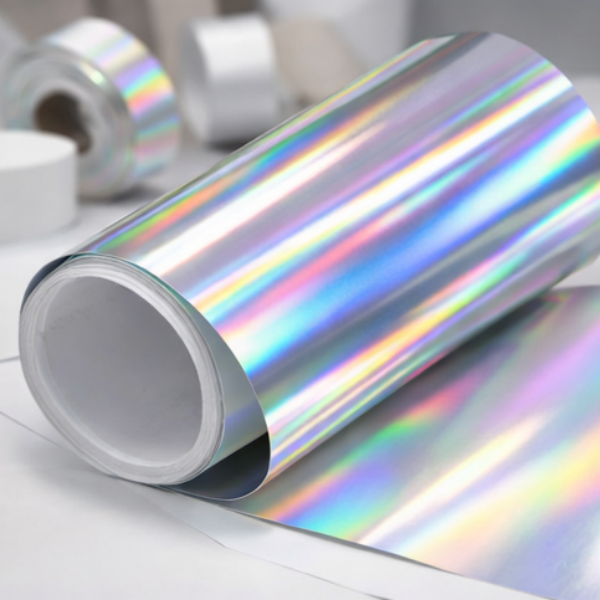
Common characteristics of paper-based label materials include:
● Smooth or lightly textured surfaces for ink transfer
● Moderate stiffness for consistent dispensing
● Limited resistance to water and oils
● Broad compatibility with standard printing methods
Film and synthetic label materials are produced from polymer-based substrates rather than paper.They are designed to offer improved durability and environmental resistance.These label materials maintain dimensional stability under moisture, temperature change, and mechanical stress.They are often used when labels must remain legible over longer periods.
Compared to paper, film label materials have lower absorbency and smoother surfaces.This affects ink selection and curing behavior during printing.Synthetic label materials also show higher tear resistance and flexibility.These properties support use on curved or squeezable containers.
Typical features associated with film and synthetic label materials include:
● Resistance to water, oils, and many chemicals
● Flexible structure for uneven surfaces
● Stable performance in variable climates
● Longer service life in demanding conditions
Specialty label materials are developed to meet defined technical or compliance requirements.They are not intended for general-purpose labeling.These label materials may address extreme temperatures, chemical exposure, or regulatory marking rules.They are selected based on documented performance criteria rather than appearance alone.
In regulated industries, specialty label materials help ensure information remains readable throughout product use.They may support traceability, safety warnings, or controlled identification.Specialty label materials are often tested under standardized conditions to confirm suitability.
Examples of situations that require specialty label materials include:
● Labels exposed to sterilization or high heat
● Identification in chemical or industrial environments
● Long-term tracking and compliance labeling
Coated and uncoated paper label materials differ mainly in surface treatment and print behavior.Coated paper label materials use a treated surface to control ink absorption and image clarity.They support sharper graphics and more consistent color reproduction across print runs.Uncoated paper label materials rely on natural fiber texture and absorb ink more freely.
These structural differences affect how label materials perform during printing and application.Coated surfaces reduce ink spread and drying time.Uncoated papers allow better breathability and handling in basic environments.Each option is selected based on readability needs and production conditions.
Key differences between coated and uncoated paper label materials include:
● Ink absorption rate and image sharpness
● Surface smoothness and tactile feel
● Drying behavior during printing
● Suitability for variable information or static designs
Kraft paper label materials are produced from unbleached pulp and retain visible fiber structure.They are commonly used when strength and surface stability are required.These label materials show higher tear resistance compared to many standard papers.They also maintain consistent performance during cutting and dispensing.
From a visual standpoint, kraft paper label materials present a natural and uniform appearance.This makes them suitable for designs that rely on simple graphics or clear text.The surface texture influences ink contrast and color saturation.Printers often adjust ink density to match kraft paper properties.
Typical characteristics of kraft paper label materials include:
● Higher mechanical strength than coated papers
● Distinct natural surface texture
● Stable performance in dry conditions
● Compatibility with limited color ranges
Recycled paper label materials are manufactured using post-consumer or post-industrial fibers.They aim to reduce raw material consumption while maintaining functional performance.These label materials vary in surface consistency due to mixed fiber sources.This variation affects print uniformity and handling behavior.
In labeling systems, recycled paper label materials are evaluated against defined performance standards.They must meet requirements for legibility, adhesion, and process stability.Sustainability considerations often involve trade-offs between material reuse and visual consistency.Production testing helps determine suitability for specific labeling conditions.
Factors commonly reviewed for recycled paper label materials include:
● Fiber composition and surface variation
● Print clarity and contrast stability
● Compatibility with standard adhesives
● Alignment with environmental compliance goals
Paper Type | Surface | Print Compatibility | Moisture Resistance | Typical Use |
Coated | Smooth | High-quality printing | Moderate | Product labels |
Uncoated | Textured | Standard printing | Low | Indoor labels |
Kraft | Natural fiber | Limited colors | Medium | Rustic packaging |
Recycled | Variable | Moderate | Low | Sustainable packaging |
Polypropylene label materials are widely used in applications requiring moisture resistance and moderate flexibility.They provide a smooth, semi-rigid surface that supports high-quality printing and consistent ink adhesion.PP label materials maintain dimensional stability when exposed to humidity and temperature variations, making them suitable for short- to medium-term labeling.
These materials are often chosen for bottles, containers, and products where label durability is essential but extreme mechanical resistance is not required.Common traits include:
● Moderate tear and puncture resistance
● Compatibility with thermal and flexographic printing
● Smooth surface for sharp graphics
● Stable performance on flat and slightly curved surfaces
Polyethylene label materials are valued for their high flexibility and conformability.PE films can stretch slightly without tearing, which allows them to adhere well to irregular or squeezable packaging.PE label materials are commonly used on flexible pouches, tubes, and containers that undergo bending during handling.
Key performance characteristics of PE label materials include:
● High elasticity for curved or flexible surfaces
● Good adhesion to various substrates including plastics and laminated surfaces
● Resistance to moisture and light oils
● Compatibility with standard pressure-sensitive adhesives
Polyester label materials are engineered for high mechanical strength and long-term stability.PET films offer excellent resistance to tearing, temperature extremes, and chemical exposure, making them suitable for industrial or outdoor applications.These materials are selected when labels must retain legibility and integrity over extended periods.
PET label materials exhibit several functional properties:
● High tensile strength and dimensional stability
● Resistance to solvents, water, and ultraviolet light
● Smooth surface suitable for high-resolution printing
● Reliability for long-term or harsh environmental conditions
Material | Flexibility | Chemical Resistance | Temperature Range | Typical Use |
Polypropylene (PP) | Moderate | Medium | -20°C to 80°C | Bottles, containers |
Polyethylene (PE) | High | Medium | -40°C to 70°C | Flexible packaging |
Polyester (PET) | Low | High | -60°C to 150°C | Industrial labels |
Food and beverage packaging requires label materials that withstand moisture, temperature variations, and handling during transportation. Materials must maintain adhesion to containers with liquids or oils and resist smudging during storage. Paper labels with appropriate coatings and synthetic films are selected based on the specific product and container surface. Food safety regulations may also dictate the use of approved materials and adhesives that do not contaminate the product.
Critical considerations for these labels include:
● Resistance to condensation and refrigeration conditions
● Compatibility with wet or oily surfaces
● Ability to retain legibility and print clarity under humidity
● Compliance with regulatory food contact standards
Cosmetic and chemical products often involve surfaces that are curved, flexible, or exposed to chemicals. Label materials for these applications must adhere reliably and resist solvents, oils, or cleaning agents. Industrial identification labels may require high durability and abrasion resistance for machinery or components. Both paper and synthetic options are evaluated based on environmental exposure, substrate type, and expected lifespan.
Key properties influencing material choice:
● Chemical and solvent resistance
● Flexibility for curved or irregular surfaces
● High adhesion to plastics, glass, and metal
● Long-term durability in operational or retail environments
Labels used in logistics, inventory management, and barcode systems demand precise printing and accurate scanning. Variable information labels must support thermal or digital printing technologies and maintain consistent quality across batches. Material selection focuses on surface smoothness, durability during transport, and the ability to withstand mechanical handling. Synthetic films are often favored for long-distance shipment, while coated papers may be used for short-term or indoor applications.
Factors considered for these labels include:
● Compatibility with thermal transfer or direct thermal printing
● Smooth, uniform surfaces for clear barcodes and text
● Resistance to abrasion, tearing, and environmental exposure
● Performance consistency across production and handling stages
Selecting label materials requires careful evaluation of the environmental conditions where labels will be applied and stored. Factors such as humidity, temperature fluctuations, and exposure to liquids or oils influence material performance. Paper-based labels may warp or lose adhesion under high moisture, while synthetic films generally maintain shape and bond integrity. Handling during transportation, stacking, and product use also affects the choice of substrate, as labels must resist tearing, wrinkling, or misalignment.
Key environmental considerations include:
● Temperature extremes and storage conditions
● Exposure to moisture, chemicals, or UV light
● Mechanical stress during handling or transport
● Surface type and curvature of the substrate
Certain industries impose specific regulatory requirements on label materials. Food, beverage, and pharmaceutical sectors often mandate materials that comply with safety and hygiene standards. Adhesives and substrates must not contaminate products or interfere with printing legibility. Labels may also need to meet environmental standards, such as recyclable or compostable certifications. Compliance influences both material selection and adhesive formulation to ensure legal and operational suitability.
Factors to evaluate for regulatory compliance:
● Food contact or pharmaceutical safety certifications
● Environmental sustainability and recycling standards
● Chemical resistance and non-toxic adhesive properties
● Alignment with regional labeling regulations
Label material selection often involves balancing cost against expected performance and lifespan. Paper labels may offer lower upfront costs but require frequent replacement in demanding environments. Synthetic labels typically have higher material costs but provide extended durability. Trade-offs include print quality, adhesion strength, environmental resistance, and ease of application. Evaluating lifecycle costs alongside performance requirements ensures the chosen label material meets operational and budgetary objectives.
Cost and performance considerations include:
● Material and adhesive pricing per unit
● Expected durability under operational conditions
● Impact of environmental exposure on replacement frequency
● Compatibility with production equipment and processes
Label materials include paper, film, and specialty types.
Each type serves specific functions in durability and print quality.
Understanding these categories helps make informed choices.
Zhejiang Hengmu Composites Materials Co., Ltd. provides reliable products.
Their materials support consistent labeling, printing, and packaging needs.
A: Label materials are substrates used for printing and identifying products, designed to meet durability, adhesion, and environmental requirements.
A: Paper materials offer cost efficiency and printability, while synthetic films provide higher moisture resistance and longer lifecycle performance.
A: Key factors include surface type, environmental exposure, handling conditions, and required print quality.
A: Material durability affects replacement frequency, adhesive performance, and workflow efficiency, influencing total lifecycle costs.
A: Trade-offs involve balancing cost, flexibility, environmental resistance, and compatibility with printing and dispensing equipment.


