


Views: 0 Author: Site Editor Publish Time: 2026-01-26 Origin: Site


Have you noticed how some labels last while others peel away?
The answer lies in label materials used across printing, packaging, and labeling workflows.
In this article, you will learn how material choice affects durability, readability, and application reliability.
Label materials are not a single layer. They are a functional system made of three core components. Each component plays a distinct role in how a label prints, adheres, and performs over time. Understanding these elements helps explain why label materials behave differently in real applications.
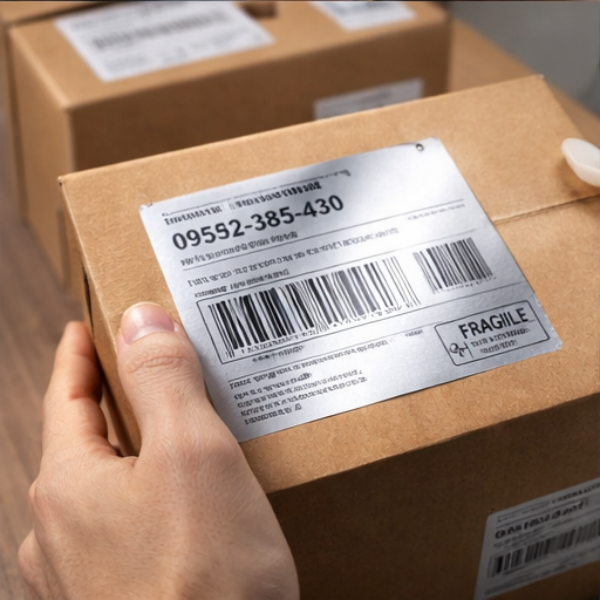
The facestock is the top layer of label materials. It is the part users see, touch, and print on. Common facestock options include paper, film, and specialty materials, each chosen for specific performance needs.
Paper facestocks are widely used for general labeling. They offer good print quality and cost efficiency. Film facestocks, such as PET or PP, provide better durability and resistance to moisture. Specialty facestocks add functions like texture, transparency, or visual effects.
Key roles of the facestock include:
● Carrying printed information and graphics
● Providing visual and tactile properties
● Influencing stiffness, flexibility, and tear resistance
The choice of facestock directly affects how label materials interact with adhesives and surfaces.
The adhesive layer sits between the facestock and the liner. It is responsible for bonding label materials to a surface. Adhesives vary by formulation, strength, and behavior under different conditions.
Adhesives must match both the facestock and the application surface. A mismatch can lead to lifting, sliding, or residue issues. Adhesive performance depends on factors such as surface energy, temperature, and contact pressure.
Common functions of the adhesive layer include:
● Creating initial tack during application
● Maintaining adhesion over time
● Allowing removability or permanence when required
In label materials, the adhesive is not chosen independently. It works as part of a layered system.
The liner is the backing layer that protects the adhesive before use. It allows label materials to be handled, printed, cut, and dispensed smoothly. Liners are removed just before application.
Typical liner materials include glassine paper, coated paper, and film liners. Each liner type offers different release properties and dimensional stability. A stable liner helps prevent curling and registration issues during printing.
The liner contributes by:
● Preserving adhesive integrity before use
● Supporting processing and die-cutting accuracy
● Ensuring consistent label release during application
Although it is discarded, the liner plays a critical role in how label materials perform during production.
Label materials function as a system rather than separate layers. Changes in one component affect the others. For example, a stiff facestock may require a different adhesive behavior than a flexible film.
The interaction between components determines overall performance. Print quality, adhesion strength, and application reliability all depend on balance within the structure.
The relationship can be summarized as follows:
Component | Primary function | Impact on label performance |
Facestock | Visual and print surface | Appearance, durability, flexibility |
Adhesive | Bonding layer | Adhesion strength and removability |
Liner | Temporary support | Processing stability and release control |
Label materials vary widely in structure and performance across industrial and commercial applications. The right choice depends on durability requirements, printing methods, handling frequency, and the operating environment. Paper, film, and synthetic label materials each respond differently to moisture, temperature changes, friction, and surface conditions. Printing compatibility also plays a key role, as some materials support sharper images or more stable barcodes than others. Understanding how different label materials behave in real use helps teams narrow options early. This material-level evaluation provides a practical foundation before assessing adhesives, application methods, or long-term lifecycle expectations.
Paper-based label materials are among the most commonly used options in labeling systems. They are widely applied in retail, logistics, warehousing, and general product identification where conditions remain relatively controlled. These materials are valued for their consistent print clarity, broad compatibility with printing technologies, and lower material cost.
Common paper label materials include coated paper, uncoated paper, and semi-gloss paper. Coated papers provide smoother surfaces that improve ink holdout and image sharpness, making them suitable for detailed text and barcodes. Uncoated papers offer a more natural appearance but absorb ink more easily, which can reduce print precision in high-density designs.
Typical use cases for paper label materials include:
● Price tags and promotional labels
● Shipping and inventory labels
● Short-term product identification
Despite their versatility, paper labels have practical limits. They are sensitive to moisture, abrasion, and repeated handling. In humid or cold-chain environments, paper label materials may curl, tear, or lose adhesion.
Film and synthetic label materials are used when higher resistance is required. They are designed to maintain performance where paper materials may fail. These materials are often selected for long-term or demanding applications.
Common synthetic label materials include polypropylene, polyethylene, and polyester. Each plastic-based material offers different balances of flexibility, strength, and temperature tolerance. Polyester is often chosen for dimensional stability. Polypropylene provides flexibility and chemical resistance.
Key reasons for using synthetic label materials include:
● Improved resistance to moisture and chemicals
● Better performance under temperature changes
● Higher durability during handling and transport
Film label materials usually require compatible printing and adhesive systems. Their low surface energy can affect ink adhesion and bonding if not properly matched.
Label materials are not defined only by type. Their properties determine how well they perform during printing, application, and use. Two critical property groups are durability and surface characteristics.
Durability describes how label materials respond to real-world stress. Environmental factors such as moisture, temperature shifts, friction, and handling all affect label lifespan.
Paper label materials can degrade quickly when exposed to water or abrasion. Film materials generally perform better in wet or outdoor conditions. Temperature extremes can cause shrinking, curling, or loss of readability depending on the material.
When evaluating durability, users often consider:
● Exposure to moisture or condensation
● Contact with chemicals or oils
● Mechanical wear during handling
Selecting label materials based on actual operating conditions reduces failure risks. A material that performs well in storage may not behave the same in transit or end use.
Surface characteristics strongly influence print quality. Smooth and coated surfaces usually deliver sharper images and consistent barcodes. Rough or absorbent surfaces can reduce clarity and color accuracy.
Different label materials interact differently with printing technologies. Thermal printing relies on heat-sensitive coatings. Inkjet and laser printing depend on surface compatibility and ink adhesion.
Key surface-related considerations include:
● Surface finish and smoothness
● Ink absorption and drying behavior
● Compatibility with printing methods
Matching label materials to the intended printing process helps ensure readability and consistency. Poor alignment between surface properties and printing technology often leads to smudging or fading.
Durability is one of the most practical criteria when selecting label materials. The required lifespan, exposure conditions, and handling frequency all influence which materials perform reliably. Some labels must last for years, while others only need to survive short operational cycles.
Long-term and industrial applications place continuous stress on label materials. Labels may face heat, moisture, friction, chemicals, and repeated contact during daily operations. In these conditions, material failure often leads to unreadable information or loss of traceability.
Synthetic label materials are commonly used for extended service life. Compared with paper-based options, they offer stronger resistance to tearing, moisture, and temperature variation. Dimensional stability is also critical, as shrinking or curling can reduce legibility over time.
Key material characteristics required for industrial labeling include:
● High resistance to abrasion and tearing
● Stability under wide temperature ranges
● Tolerance to oils, solvents, and cleaning agents
● Consistent readability over long periods
Durability expectations in industrial environments are usually measured in months or years. Materials are selected based on how long information must remain legible, not on initial appearance alone.
The table below outlines typical durability considerations:
Requirement | Impact on material choice |
Long service life | Favors synthetic materials |
Chemical exposure | Requires resistant surfaces |
Frequent handling | Needs abrasion resistance |
Temperature changes | Demands dimensional stability |
Short-term labeling focuses on identification during limited stages. These labels support tasks such as storage, sorting, or temporary tracking. Extended durability is often unnecessary in these cases.
Paper-based label materials are commonly used for short-life applications. They offer adequate print quality and lower cost. When used indoors or in controlled conditions, they perform reliably for brief periods.
Common uses for temporary label materials include:
● Shipping and logistics identification
● Temporary pricing or promotional labeling
● Internal process tracking
There is a clear trade-off between durability, cost, and lifespan. Lower-cost materials reduce expenses but degrade faster when exposed to moisture or friction. Matching label materials to the actual duration of use helps prevent over-specification while maintaining functional reliability.
Choosing label materials for packaging requires understanding how materials interact with containers and how they perform throughout the product lifecycle. Packaging surfaces, handling conditions, and storage environments all influence material suitability.

The application surface is a primary factor in selecting label materials. Different container materials present different challenges for adhesion, flexibility, and appearance. Label materials must conform to the surface without lifting, wrinkling, or losing readability.
Paper containers usually pair well with paper label materials due to similar surface characteristics. Plastic containers often require film label materials that can accommodate lower surface energy. Glass and metal surfaces are smooth and rigid, which allows a wider range of label materials but increases visibility of defects.
Container shape also affects material selection:
● Flat and rigid packaging supports stiffer label materials
● Curved surfaces require flexible materials to prevent edge lifting
● Squeezable or deformable containers need materials that stretch without cracking
Matching label materials to both surface type and container geometry improves application consistency and long-term performance.
The table below outlines common surface considerations:
Container surface | Label material considerations |
Paperboard | Compatible with paper materials |
Plastic | Often needs flexible film materials |
Glass | Requires smooth, defect-free materials |
Metal | Demands dimensional stability |
Storage and handling conditions influence how label materials perform before and after application. Temperature changes, humidity, and stacking pressure can alter material behavior. Labels may curl, shrink, or lose clarity if materials are not suited to storage conditions.
Handling frequency also matters. Products handled repeatedly during transport or retail display require materials that resist abrasion. Short handling cycles allow for simpler materials, while frequent contact demands stronger surfaces.
Lifecycle alignment helps avoid over- or under-specification. Label materials should last as long as the product requires identification. For short shelf-life goods, long-term durability may be unnecessary. For extended shelf-life products, premature label failure can create traceability or compliance issues.
Key lifecycle factors to evaluate include:
● Expected storage duration and environment
● Number of handling stages before end use
● Required readability throughout the product lifespan
Considering these factors together supports more reliable packaging label performance.
Label materials are defined by their composition, surface properties, and use conditions.
These factors shape durability, print quality, and application reliability.Understanding how materials behave helps users choose labels that match real needs.
Informed selection reduces failure across printing and packaging workflows.Zhejiang Hengmu Composites Materials Co., Ltd. supports this process.
Its label materials offer stable performance and practical value across applications.
A: Label materials refer to facestock, adhesive, and liner used for professional labeling systems.
A: Label materials influence adhesion, durability, and readability under real operating conditions.
A: Label materials are selected based on temperature, moisture, chemicals, and handling frequency.
A: Label materials affect service life, replacement rates, and total operational labeling costs.


