


Views: 0 Author: Site Editor Publish Time: 2026-02-09 Origin: Site


Why do some labels last in moisture while others fail fast?
Understanding label materials shapes packaging performance and product identification.
In this article, you will learn what BOPP is, where it fits, and what to evaluate before choosing it.
BOPP stands for biaxially oriented polypropylene, a film-based option within modern label materials. It belongs to the broader group of plastic label materials used in self-adhesive labeling systems. Unlike paper-based stocks, BOPP is produced from polypropylene resin and converted into a thin, uniform film. This structure provides consistent thickness and stable surface behavior across large production runs.
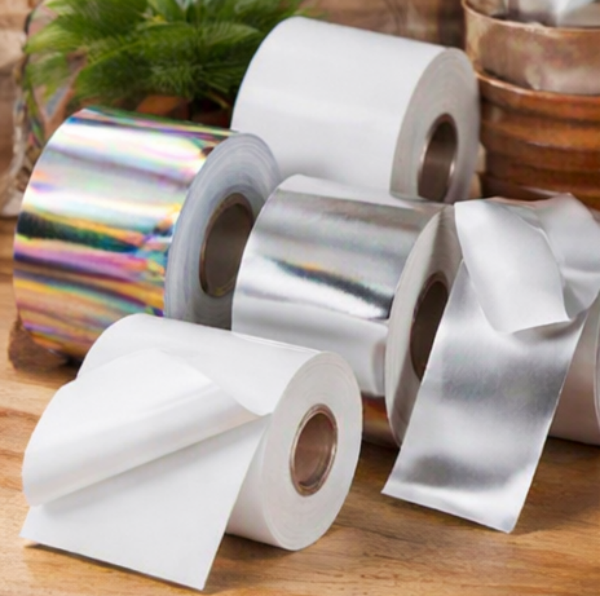
Within label materials, BOPP is generally categorized as a film label material rather than a fibrous substrate. This distinction directly affects how it performs during printing, coating, and application processes. Film-based label materials are often considered when environmental exposure or surface durability is a concern.Common label material categories used for self-adhesive labels include:
● Paper-based label materials, derived from cellulose fibers
● Film label materials, including polypropylene and polyethylene films
● Synthetic label materials designed for moisture or chemical resistance
In a typical label construction, BOPP functions as the facestock layer. It works together with an adhesive layer and a release liner to form a complete label system. Its primary role is to provide a stable and printable surface for information, graphics, and identification elements.
Biaxial orientation refers to stretching polypropylene film in two perpendicular directions during manufacturing. This process changes how polymer chains are arranged within the material. Instead of remaining randomly distributed, the chains become more uniformly aligned, which alters the film’s physical behavior.
For label materials, this orientation process affects dimensional stability and surface uniformity. A biaxially oriented film is less likely to deform during printing or application, which is an important consideration in converting and dispensing stages. Surface smoothness also improves, supporting consistent ink and coating performance.The effects of biaxial orientation can be summarized as follows:
Aspect | Effect on BOPP Film | Relevance to Label Materials |
Chain alignment | More uniform molecular structure | Predictable mechanical behavior |
Dimensional stability | Reduced shrinkage and distortion | Stable printing and application |
Surface quality | Smoother and more consistent | Improved ink and coating interaction |
Compared with non-oriented polypropylene films, biaxially oriented films exhibit more balanced strength across different directions. In labeling workflows, this consistency helps maintain label shape and appearance during handling, conversion, and end use.
BOPP label materials are produced by stretching polypropylene film in two directions during manufacturing. This process is known as biaxial stretching and is central to how these label materials perform. It changes the internal arrangement of polymer chains, which affects strength and optical properties.
The stretching occurs in a controlled sequence. The film is first oriented in one direction, then stretched again perpendicular to the first. This method increases tensile balance and reduces weak points across the film surface. As a result, the material shows consistent behavior during printing and application.
For label materials, this process also improves visual clarity. The film becomes more uniform, which supports clean graphics and fine details. These characteristics are often evaluated when selecting film label materials for high-volume converting.Typical outcomes of biaxial stretching include:
● More balanced strength across length and width
● Reduced deformation during heat or tension
● Clearer and more uniform film appearance
After stretching, BOPP film undergoes surface treatment to prepare it for printing and coating. Untreated polypropylene has low surface energy, which limits ink and coating adhesion. Surface treatment modifies this behavior without changing the base film structure.
Common treatment methods alter the film surface at a microscopic level. They increase surface energy and improve wettability, allowing inks and coatings to spread evenly. For label materials, this step is critical for achieving consistent print results across different technologies.
Surface-treated film label materials are more predictable during downstream processes. They respond more consistently to inks, varnishes, and adhesives. This predictability helps reduce variation during large production runs.The table below outlines the purpose of surface treatment in BOPP label materials:
Process Focus | Effect on Film Surface | Relevance to Label Materials |
Surface energy increase | Better ink interaction | Improved print consistency |
Wettability adjustment | Even coating spread | Stable varnish and adhesive layers |
Surface uniformity | Reduced defects | Cleaner finished labels |
Manufacturing methods influence how label materials behave during conversion. Conversion includes printing, slitting, die cutting, and dispensing. Variations in film structure or surface treatment can affect each of these steps.
For BOPP label materials, consistency is a key factor. Uniform thickness and stable orientation reduce issues such as curling or misalignment. These factors are considered during material assessment, especially in automated converting environments.
When evaluating label materials, converters often look beyond appearance. They consider how the material responds to mechanical stress and processing speed. Manufacturing methods shape these behaviors, making them a core consideration in material selection rather than a background detail.
BOPP label materials are designed as thin polymer films with stable mechanical behavior. Their structure allows them to resist tearing while maintaining a uniform thickness. This balance is important in labeling environments where materials pass through printing and converting equipment at speed.
Thickness in BOPP label materials is typically controlled during film production rather than added later. This results in consistent caliper across the roll, which supports predictable cutting and dispensing. Flexibility is another key factor. The film can conform to curved or uneven surfaces without cracking.
From a material evaluation perspective, durability, thickness, and flexibility are often considered together. These properties influence how label materials behave during handling, storage, and application.Key physical characteristics commonly assessed include:
● Resistance to tearing during conversion
● Stable thickness across the label surface
● Flexibility that supports container conformity
One defining property of BOPP label materials is their resistance to moisture and surface contamination. Polypropylene does not absorb water, which helps the label maintain structure in humid or wet conditions. This behavior differs from fibrous label materials that can swell or weaken when exposed to moisture.
Oil and chemical resistance also affect label performance. Many packaged products involve contact with oils, cleaning agents, or mild solvents during normal use. In these situations, film-based label materials tend to retain legibility and adhesion more consistently.
Resistance performance is usually evaluated under typical storage and handling conditions rather than extreme exposure. These assessments help determine whether BOPP is appropriate for a given labeling environment.The table below outlines how resistance properties relate to common handling factors:
Exposure Type | Typical Material Response | Relevance to Label Materials |
Moisture | Minimal absorption | Shape and surface stability |
Oils | Limited surface interaction | Print and coating retention |
Mild chemicals | Reduced surface degradation | Information legibility |
Optical clarity and surface quality are important considerations when comparing synthetic label materials. BOPP films are produced with a smooth and uniform surface, which supports consistent printing results. This surface structure helps fine text and graphics remain well defined after printing.
Compared with other synthetic label materials, BOPP often shows balanced clarity without excessive stiffness. Surface treatments further influence how inks and coatings interact with the film. These treatments aim to improve uniformity rather than alter appearance.
When evaluating label materials side by side, optical and surface characteristics are considered in relation to printing method, design requirements, and end-use conditions. These factors help explain why BOPP is frequently assessed alongside other film-based options rather than paper-based materials.
BOPP label materials and paper label materials differ in structure and behavior. Paper labels are fiber-based and absorb moisture from the environment. BOPP is a film material with a non-porous surface. This structural difference affects how each material responds during printing, storage, and use.
In practical terms, paper label materials may change dimension when exposed to humidity. BOPP label materials tend to remain stable under similar conditions. This difference influences handling during conversion and consistency during application.
Performance behavior also varies after labeling. Paper surfaces can scuff or tear more easily. Film-based label materials are often evaluated when durability or surface stability is a consideration rather than appearance alone.Key structural differences include:
● Paper label materials rely on fiber bonding
● BOPP label materials rely on polymer film structure
● Moisture interaction differs between porous and non-porous surfaces
Within plastic label materials, BOPP is one of several film options used for self-adhesive labels. Other plastic films may differ in stiffness, thickness, or surface energy. These variations affect printing behavior and mechanical response during converting.
Compared with thicker plastic films, BOPP is often assessed for its balance between strength and flexibility. It maintains dimensional stability without becoming rigid. This balance is relevant when labels must conform to containers or move smoothly through automated equipment.
Surface characteristics also vary across plastic label materials. BOPP films are typically engineered for uniform surfaces. This uniformity supports consistent printing and coating results when compared under similar conditions.The table below summarizes general comparison factors among label materials:
Material Type | Surface Structure | Typical Performance Focus |
Paper labels | Fibrous, porous | Print texture and cost |
BOPP labels | Smooth polymer film | Stability and durability |
Other plastic films | Varies by formulation | Stiffness or specialty use |
Although BOPP label materials are widely used, alternative label materials may be evaluated in specific situations. Paper label materials are often considered when recyclability alignment or a textured surface is required. Their behavior may suit short-term or dry environments.
Other plastic label materials may be assessed when extreme flexibility, heat resistance, or specialty performance is needed. In these cases, material selection depends on processing conditions rather than general durability.
Label materials are typically chosen based on use conditions, converting requirements, and container design. BOPP is one option within this evaluation process, not a default choice for every application.
BOPP label materials are frequently evaluated for food packaging and beverage labeling environments. These settings often involve moisture, refrigeration, or surface contact during storage and handling. Film-based label materials are considered because they maintain dimensional stability and surface integrity under these conditions.
In beverage labeling, containers may experience condensation or temperature changes. Non-porous label materials reduce the risk of surface distortion and print degradation. This behavior supports clear presentation of product information over time.
Food packaging workflows also place emphasis on consistent application. Label materials that feed smoothly through automated lines are commonly specified to reduce variation and handling issues.Typical food and beverage contexts where BOPP is assessed include:
● Bottled liquids and ready-to-drink products
● Packaged foods exposed to chilled storage
● Containers requiring stable label appearance
Beyond food packaging, BOPP label materials appear across personal care and retail environments. Products in these categories may encounter oils, repeated handling, or surface abrasion. Film label materials are often considered where labels must remain legible throughout the product lifecycle.
In retail settings, labels carry pricing, branding, or identification data. Consistent print quality and surface stability are important for scanning and visual clarity. BOPP is evaluated alongside other label materials when durability and uniform appearance are required.
Logistics and general product identification introduce additional factors. Labels may pass through sorting systems or experience friction. Material selection focuses on how label materials perform during transport and repeated contact rather than visual design alone.Common non-food use cases include:
● Personal care containers exposed to moisture or oils
● Retail labels requiring clear text and codes
● Logistics labels used for tracking and identification
Film-based packaging label materials are commonly specified in industries with automated production and high handling frequency. These environments prioritize predictable material behavior during conversion and application. BOPP is assessed as part of a broader group of synthetic label materials rather than as a standalone solution.
Industry context often shapes material selection criteria. In sectors with fast-moving goods, label materials must maintain shape and adhesion during high-speed processing. Film materials are reviewed for their ability to meet these mechanical demands.
The table below outlines industry factors that influence the use of film-based label materials:
Industry Context | Key Material Requirement | Role of Film Label Materials |
High-volume packaging | Dimensional stability | Consistent application |
Automated logistics | Surface durability | Readable identification |
Consumer goods | Uniform appearance | Reliable labeling performance |
Across these contexts, BOPP label materials are considered based on operational needs rather than aesthetic preference. Their use reflects process requirements and handling conditions within each industry.
BOPP label materials are based on polypropylene, which places them within established polypropylene recycling streams. As a label material, BOPP is evaluated in relation to how it behaves during collection, sorting, and reprocessing stages. Its polymer base aligns with containers made from similar materials, which can simplify material separation in some recycling systems.
In recycling assessments, the focus is not only on the label itself but also on its interaction with inks, coatings, and adhesives. These elements influence how label materials perform during washing and reprocessing. For this reason, BOPP is considered as part of a complete label construction rather than as an isolated film.
Label durability plays a role in how materials move through recycling workflows. Durable label materials tend to remain intact during use, which supports product identification but also affects removal during recycling. This balance is part of material evaluation.
Container material is another factor. When label materials and containers share a similar polymer base, separation may be more straightforward. When materials differ, additional processing steps may be required. These interactions influence decisions around label material selection in packaging design.
Recycling processes often involve heat, agitation, and chemical exposure. How label materials respond to these steps affects residue levels and material recovery. These behaviors are considered during sustainability reviews rather than assumed.Factors commonly reviewed together include:
● Label material composition
● Container polymer type
● Adhesive behavior during washing
Sustainability discussions around label materials often focus on lifecycle impact rather than a single attribute. Material sourcing, durability, and end-of-life handling are all part of this evaluation. BOPP label materials are reviewed alongside other options based on how they fit into these broader criteria.
Durability can reduce the need for relabeling or replacement during product use. At the same time, recycling outcomes depend on material combinations and processing conditions. These trade-offs are part of standard sustainability assessments.
The table below outlines common sustainability factors used when reviewing label materials:
Consideration | Evaluation Focus | Relevance to Label Materials |
Material type | Polymer compatibility | Recycling alignment |
Label lifespan | Resistance during use | Reduced replacement |
End-of-life handling | Separation and processing | Material recovery outcomes |
These considerations help frame sustainability as a system-level issue rather than a single material claim.
BOPP label material is appropriate when label materials require durability, stability, and consistent surface behavior. It is commonly reviewed alongside paper and other film options based on use conditions.
Material decisions depend on application, handling, and recycling context. Zhejiang Hengmu Composites Materials Co., Ltd. offers label materials that support reliable and well-informed packaging choices.
A: In industrial contexts, label materials like BOPP support durability, stability, and process consistency.
A: Label materials such as BOPP are reviewed for moisture exposure and automated handling.
A: Label materials influence print consistency, application speed, and handling reliability.
A: Label materials involve balancing durability, recycling compatibility, and conversion requirements.


