


Views: 0 Author: Site Editor Publish Time: 2026-02-11 Origin: Site


Choosing the wrong label can ruin a cosmetic package faster than expected.
In cosmetics, label materials matter far beyond appearance.
This article explores how to choose label material for cosmetics.
It explains how material choice affects durability, readability, and compliance.
You will learn how label materials function within cosmetic packaging systems.
The focus stays on practical, informed decision-making.
Cosmetic packaging places specific functional and environmental demands on label materials. Unlike many other packaged goods, cosmetics are handled frequently and used over extended periods. Products are often exposed to moisture, oils, friction, and temperature changes. Because of this, label materials must support both visual presentation and long-term performance without degrading during normal use.
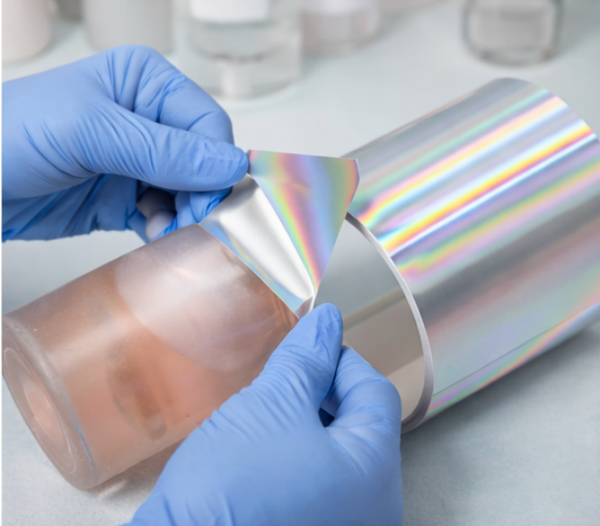
Cosmetic products interact closely with daily routines. They are stored in bathrooms, handbags, and travel kits, where humidity and temperature fluctuations are common. These conditions increase the risk of label lifting, smudging, or surface damage if unsuitable label materials are used.
Cosmetics also rely heavily on product information printed directly on the label. Ingredient lists, usage instructions, and batch details must remain readable throughout the product lifecycle. This creates additional pressure on label materials to maintain print stability and surface integrity over time.
Key factors that differentiate cosmetic packaging from other categories include:
● Regular exposure to water, oils, and alcohol-based formulations
● Repeated hand contact during daily use
● Higher expectations for visual consistency and cleanliness
The environment in which a cosmetic product is used plays a direct role in material selection decisions. Products designed for wet environments require label materials that can resist moisture without losing adhesion. Dry-use products, by contrast, may allow for a broader range of material options.
Environmental factors commonly assessed during label material selection include:
● Humidity levels during storage and use
● Direct contact with water or steam
● Exposure to oils, lotions, or solvents
● Temperature variation during transport and storage
These factors help determine whether label materials should prioritize resistance, flexibility, or surface protection. A mismatch between environment and material often leads to premature label failure.
Cosmetic products are handled far more frequently than many other consumer goods. Bottles are squeezed, jars are opened daily, and tubes are pressed repeatedly. This constant interaction places mechanical stress on label materials and adhesives.
High handling frequency increases the likelihood of:
● Edge curling or peeling
● Surface abrasion and print wear
● Cracking on flexible containers
Label materials selected for cosmetics must tolerate repeated contact without visible deterioration. This requirement often narrows the range of suitable materials, especially for products designed for long-term use.
The table below highlights how cosmetic label materials differ in priority compared to other packaging categories:
Packaging Category | Primary Label Material Focus |
Cosmetics | Moisture resistance, durability, print stability |
Food (dry goods) | Print clarity, cost efficiency |
Logistics labels | Adhesion speed, barcode readability |
Promotional packaging | Visual impact, short-term use |
Cosmetic products create demanding conditions for label materials. They are exposed to water, oils, alcohol-based formulas, and frequent handling. Because labels remain in use for long periods, performance issues often appear after purchase rather than at the point of sale. Selecting suitable label materials requires careful attention to resistance, adhesion, and dimensional stability.
Skincare and personal care products are commonly used in humid environments. Bathrooms, showers, and sinks expose labels to water and steam on a regular basis. Oils, lotions, and cleansing agents also come into direct contact with the label surface during normal use. These factors place constant stress on label materials.
Moisture and oil exposure can affect label materials in several ways:
● Water penetration may weaken the face material or ink layer
● Oils can reduce surface friction and cause print smearing
● Alcohol-based formulas may affect coatings and adhesives
Different categories of cosmetic label materials respond differently to these conditions. Film-based materials tend to resist moisture and oils more consistently. Paper-based materials often require surface treatments to slow absorption. Understanding how each material behaves under exposure helps prevent premature visual or functional failure.
Adhesion performance is closely linked to container shape and material. Cosmetic packaging includes rigid bottles, glass jars, and flexible tubes. Each surface creates different stress patterns on label materials during use. A label that performs well on a rigid container may fail on a squeezable one.
Rigid containers usually provide a stable surface. Adhesion issues here are often related to surface energy or environmental exposure. Flexible packaging introduces repeated deformation, which increases stress on both the label material and adhesive layer. Shape stability becomes critical under these conditions.
Common adhesion and deformation issues include:
● Edge lifting caused by repeated squeezing
● Wrinkling when the container returns to shape
● Cracking or distortion of stiff label materials
The table below outlines how container type influences label material behavior:
Container Type | Primary Stress on Label Materials |
Glass jars | Moisture exposure, surface smoothness |
Rigid plastic bottles | Handling friction, temperature change |
Flexible tubes | Compression, shape recovery |
Cosmetic packaging relies on label materials that balance durability, appearance, and print performance. Different materials are selected based on how the product is used and stored. Among the available options, film-based and paper-based label materials are the most common in cosmetic applications. Each category serves a distinct purpose and carries clear performance limits.
Film label materials are widely used in cosmetic packaging because they offer stable performance under demanding conditions. They are designed to resist moisture, oils, and frequent handling. These properties make them suitable for products used in bathrooms or carried during travel.
Film-based label materials typically share the following characteristics:
● Low water absorption and strong surface integrity
● Consistent adhesion on plastic and glass containers
● Resistance to surface abrasion during repeated use
They are often selected when cosmetic products require higher mechanical or environmental resistance. Items exposed to steam, splashing water, or oily formulations benefit from materials that maintain shape and print clarity over time. Film label materials also support clear or minimal designs, where surface smoothness and transparency are important.
Situations that commonly require film-based label materials include:
● Skincare products used near sinks or showers
● Personal care items handled daily
● Packaging that must remain visually clean throughout its lifecycle
Paper label materials are used in cosmetic packaging when environmental exposure is limited. They are generally chosen for products stored in dry conditions or secondary packaging. While paper offers a natural appearance, its performance depends heavily on surface treatment.
Paper-based label materials may be appropriate when:
● The product is not exposed to water or oils
● The label is applied to outer packaging or cartons
● Visual texture is prioritized over durability
Without protection, paper label materials can absorb moisture and lose structural stability. To reduce this risk, surface treatments are commonly applied. These treatments influence how paper performs under light exposure and handling.
Common surface treatments and their effects include:
● Coatings that slow moisture absorption
● Laminations that improve scratch resistance
● Finishes that enhance print sharpness
The table below summarizes how film-based and paper-based label materials differ in cosmetic use:
Material Category | Typical Use Conditions | Key Performance Limitation |
Film-based | Wet or high-contact environments | Higher material cost |
Paper-based | Dry or protected packaging | Sensitivity to moisture |
Container type plays a decisive role when selecting label materials for cosmetics. Even when products share similar formulas, the physical behavior of the container can change how labels perform over time. Surface texture, rigidity, and movement during use all influence adhesion, durability, and visual stability.
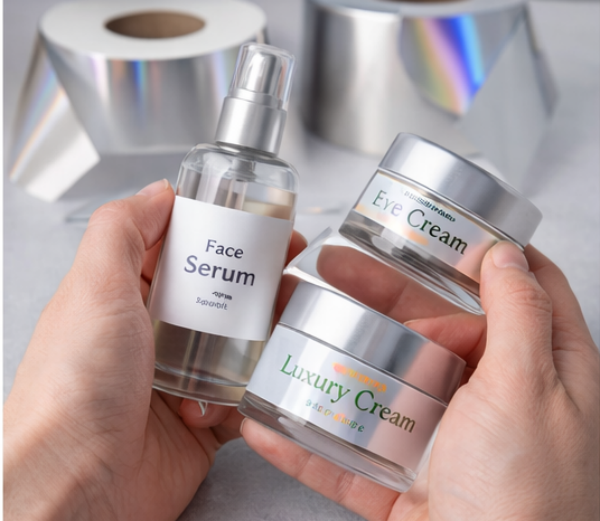
Glass and rigid plastic bottles provide relatively stable surfaces for label application. Their shape does not change during use, which reduces mechanical stress on label materials. However, surface characteristics still affect how well labels bond and remain intact.
Glass containers usually have smooth, low-porosity surfaces. This can limit adhesive grip if the label material is not compatible. Rigid plastic bottles vary more widely. Mold release agents, surface energy, and texture can all influence adhesion behavior. Label materials must be chosen with these factors in mind to avoid lifting or edge separation.
Key considerations for bottles and jars include:
● Surface smoothness and cleanliness
● Container curvature and label size
● Exposure to moisture during storage or use
The table below outlines how surface characteristics affect label material selection:
Container Surface | Primary Label Material Consideration |
Smooth glass | Adhesive strength and wet resistance |
Rigid plastic | Surface energy and conformity |
Lightly textured plastic | Flexibility and edge adhesion |
Selecting label materials that match these surface conditions helps maintain consistent appearance throughout the product’s lifespan.
Tubes and squeezable containers introduce a different set of challenges. These formats are designed to deform during normal use, which places repeated stress on label materials. Flexibility becomes a critical requirement under these conditions.
When a tube is squeezed, the label must stretch and recover without cracking or wrinkling. Rigid label materials tend to deform permanently, leading to visual distortion and early failure. Flexible materials adapt better to repeated compression and shape recovery.
Material behavior under frequent handling often involves:
● Expansion and contraction during squeezing
● Friction from repeated hand contact
● Stress concentration along edges and seams
Visual appearance and surface feel influence how cosmetic packaging is perceived during use. While performance remains the primary requirement, label materials also affect touch, glare, and surface cleanliness. These factors shape how products look on shelves and how they feel during daily handling.
Surface finish changes how label materials interact with light and touch. Matte finishes reduce glare and fingerprints, which helps labels maintain a clean appearance. Gloss finishes reflect light more strongly and can enhance color contrast, but they may show smudges more easily.
Soft-touch finishes introduce a different tactile response. They create a smooth, low-friction surface that feels distinct during handling. However, this surface can be more sensitive to abrasion if the underlying label material lacks durability. Finish choice therefore affects both appearance and functional performance.
Common surface finish effects include:
● Matte surfaces that reduce reflections and visible wear
● Gloss surfaces that increase color sharpness and visual contrast
● Soft-touch coatings that alter tactile perception during use
The relationship between finish and performance depends on how the product is handled. Labels exposed to frequent contact benefit from finishes that balance visual appeal with resistance to marks and wear.
Transparent label materials are often used to create a minimal or “no-label” appearance. This approach allows the container or product color to remain visible through the label. While visually subtle, clear labels introduce technical constraints that affect material selection.
Clear label materials require precise printing and stable adhesion. Any edge lifting or adhesive inconsistency becomes more visible on transparent surfaces. Ink density, background contrast, and surface clarity all influence legibility.
Key considerations for clear cosmetic labels include:
● Sufficient contrast between printed text and container color
● Adhesives that remain visually neutral over time
● Resistance to moisture that could cause haze or edge visibility
The table below highlights common challenges associated with clear label materials:
Consideration | Impact on Clear Labels |
Low contrast backgrounds | Reduced text readability |
Moisture exposure | Increased risk of edge visibility |
Surface scratches | More noticeable visual defects |
Cosmetic labels serve a regulatory function in addition to a visual one. Label materials must support clear, stable printing over the entire product lifecycle. Information such as ingredients and batch details must remain readable under normal storage and usage conditions. These requirements influence material choice as much as appearance or durability.
Cosmetic packaging often carries dense regulatory information. Ingredient lists, usage instructions, and batch identification must fit within limited label space. This increases the importance of print clarity and dimensional stability. Label materials that distort, absorb ink, or degrade over time can compromise legibility.
Print performance depends on how the label material interacts with inks and coatings. Surface smoothness affects ink spread and edge definition. Materials that resist moisture help prevent ink bleeding or fading during use. Label materials selected for cosmetics must maintain contrast and sharpness despite exposure to water, oils, and handling.
Key factors that influence print stability include:
● Surface consistency and ink adhesion
● Resistance to smearing under moisture exposure
● Dimensional stability during temperature changes
The table below shows how different performance factors affect long-term readability:
Performance Factor | Impact on Printed Information |
Surface absorption | Reduced text sharpness |
Moisture exposure | Ink fading or bleeding |
Material deformation | Text misalignment |
Evaluating these factors helps ensure that regulatory information remains legible from production through end use.
Sustainability considerations increasingly influence label material selection. Many cosmetic brands assess recyclability and material compatibility with packaging systems. Label materials can affect whether containers are recyclable, even when the container itself meets recycling standards.
Some materials separate cleanly during recycling, while others may interfere with processing. Coatings and adhesives also play a role in material recovery. Balancing durability with material responsibility requires understanding how each label material behaves after disposal.
Common sustainability-related considerations include:
● Compatibility with recycling streams
● Material separation during processing
● Use of coatings that affect recyclability
The table below outlines typical trade-offs between durability and sustainability:
Design Priority | Resulting Trade-Off |
High moisture resistance | More complex material structures |
Long-term durability | Reduced recycling efficiency |
Minimal material use | Lower resistance to wear |
These trade-offs require careful evaluation. Label materials must meet regulatory and performance needs while aligning with broader sustainability goals.
Selecting label materials for cosmetics often involves trade-offs among durability, visual impact, and budget limits. These attributes interact, and improving one can constrain the others. Decisions are rarely made in isolation because label materials must perform reliably while supporting packaging design and production realities.
Performance requirements usually set the baseline. Labels must resist moisture, oils, and handling before appearance or cost is considered. When performance targets are not met, visual quality becomes irrelevant because labels may fail during use. For this reason, functional suitability is typically evaluated first when comparing label materials.
Common trade-offs encountered during material selection include:
● Higher resistance materials that increase unit cost
● Premium finishes that reduce abrasion tolerance
● Lower-cost options that limit durability or print stability
Appearance considerations influence how products are perceived at purchase and during use. Matte, gloss, or textured finishes can affect shelf visibility and tactile response. These features may require additional coatings or treatments, which can increase complexity and cost. Appearance choices should therefore be assessed after confirming that performance needs are satisfied.
Cost considerations extend beyond material price alone. Production efficiency, waste rates, and rework caused by label failure also affect overall cost. A lower-cost label material may lead to higher downstream expenses if it performs poorly under real conditions.
The table below illustrates how priorities typically shift during decision-making:
Priority Order | Primary Focus | Typical Outcome |
Performance first | Resistance and adhesion | Reduced failure risk |
Appearance second | Finish and visual clarity | Improved shelf presentation |
Cost last | Material and processing cost | Controlled total expense |
Balancing these factors requires understanding how label materials behave throughout the product lifecycle. By prioritizing functional requirements first, cosmetic packaging decisions can manage cost and appearance within realistic performance limits.
Choosing label material for cosmetics is a structured decision process.
It requires balancing performance, readability, and long-term usability.Appropriate label materials help maintain clear information.
They support durability, compliance, and consistent product presentation.Key factors should be reviewed at each selection stage.
Material behavior, container type, and usage conditions all matter.Zhejiang Hengmu Composites Materials Co., Ltd. provides reliable label materials.
Their products support stable printing and practical cosmetic packaging needs.
A: Label materials determine resistance to moisture, oils, and handling, which directly impacts durability, readability, and regulatory compliance during product use.
A: Label materials for wet environments require strong adhesion and moisture resistance to prevent peeling, ink bleeding, or surface damage.
A: Label materials affect rework rates, label failure risk, and lifecycle stability, which influence total packaging and operational costs.
A: Label materials that mismatch containers or environments may cause deformation, poor legibility, and compliance issues during distribution and use.


